Advanced Energy Can Improve Reliability - If It’s Allowed to Compete

Posted by Dylan Reed and Frank Swigonski on Jun 2, 2016 3:44:42 PM

ferc-reliability-lights-night-nasa-509375-edited.jpg

Reliability is one of the biggest responsibilities shouldered by the regulators and grid operators that manage our power system. Advanced energy technologies and innovative operational techniques have the potential to increase reliability while lowering costs and increasing customer participation at the same time. However, current practices do not allow these solutions to compete head-to-head with incumbent technologies to provide reliability services. Instead, grid operators tend to address reliability challenges by offering financial incentives to beef up traditional transmission and generation assets. By not allowing advanced energy technologies to compete for reliability services, the Federal Energy Regulatory Commission (FERC), which oversees wholesale power markets, is missing an opportunity to drive down costs through competition while increasing reliability at the same time.

Read More

Topics: Federal Priorities

THIS IS ADVANCED ENERGY: Combined Heat and Power

Posted by Caitlin Marquis on May 31, 2016 5:07:45 PM

This post is one in a series featuring the complete slate of advanced energy technologies outlined in the report This Is Advanced Energy.

1.3_CHP.jpg

Combined Heat and Power (CHP), also known as cogeneration, produces electricity and useful heat from the same fuel source in an integrated system. CHP systems recover exhaust or waste heat from electricity generation for use in industrial processes, space heating, and water heating. CHP technology achieves greater levels of overall efficiency than using separate thermal and power systems. Any fuel type can be used, including fossil fuels and renewable fuels. Because thermal energy (steam, hot water) is more difficult to transport than electricity, CHP systems are typically installed at sites with large, steady thermal loads, such as industrial facilities, college campuses, hospitals, and military bases. CHP systems can also power district energy plants, which produce steam, hot water, and/or chilled water at central plants, then distribute the steam or water to multiple buildings through a network of insulated pipes generally located underground.

Read More

NEWS: Employment Up, Costs Down – That’s the Advanced Energy Way

Posted by Lexie Briggs on May 27, 2016 10:43:04 AM

1.12_Residential_and_Commercial_Solar_Power.jpg

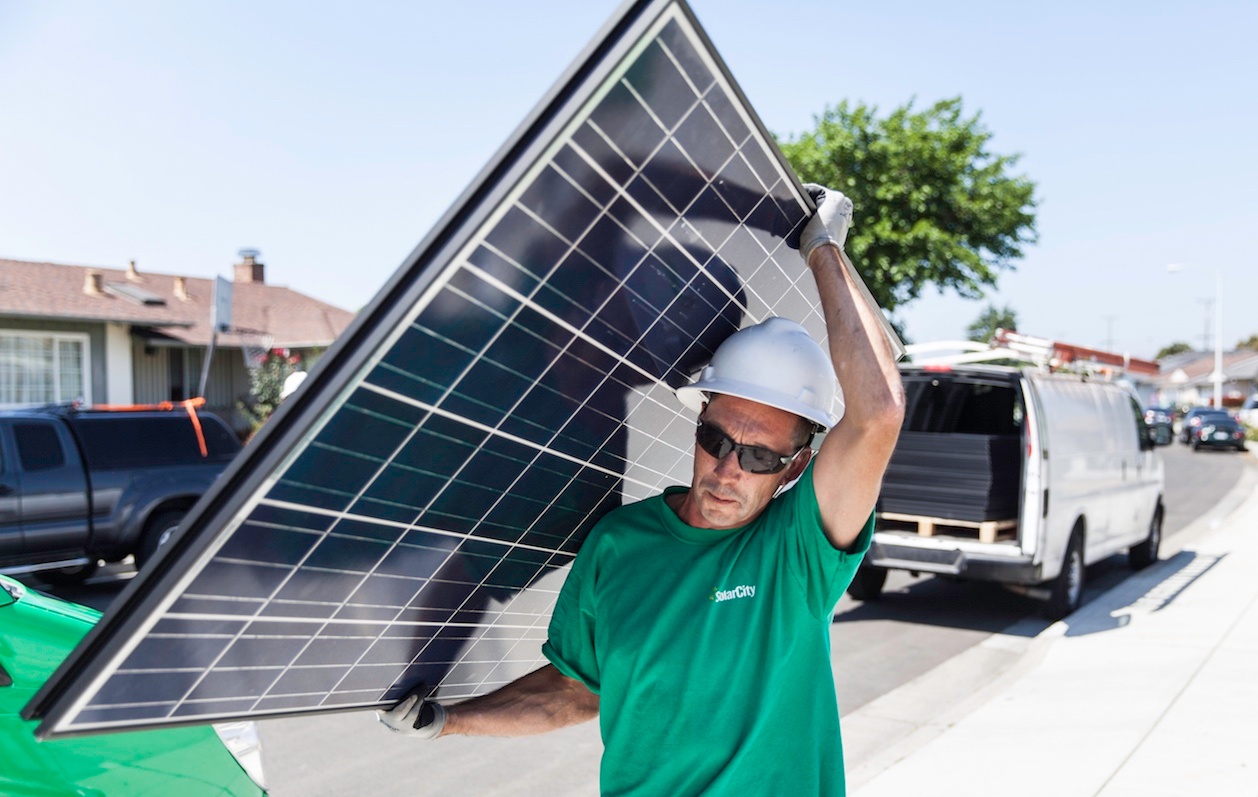
Image courtesy of AEE member SolarCity.

Not sure why it fell to the International Renewable Energy Agency to tell us this, but the number of people employed by the solar industry in the U.S. has passed oil and gas extraction, as well as coal mining. Also, as reported by Bloomberg, IRENA points out that these solar businesses have grown 12 times faster than overall employment growth in the U.S.

Read More

Topics: News Update

U.S. Wind Build-Out Continues; Will Offshore Follow?

Posted by Frank Swigonski on May 27, 2016 9:27:45 AM

This post is one in a series of feature stories on trends shaping advanced energy markets in the U.S. and around the world, drawn from Advanced Energy Now 2016 Market Report, which was prepared for AEE by Navigant Research.

us-wind.jpg

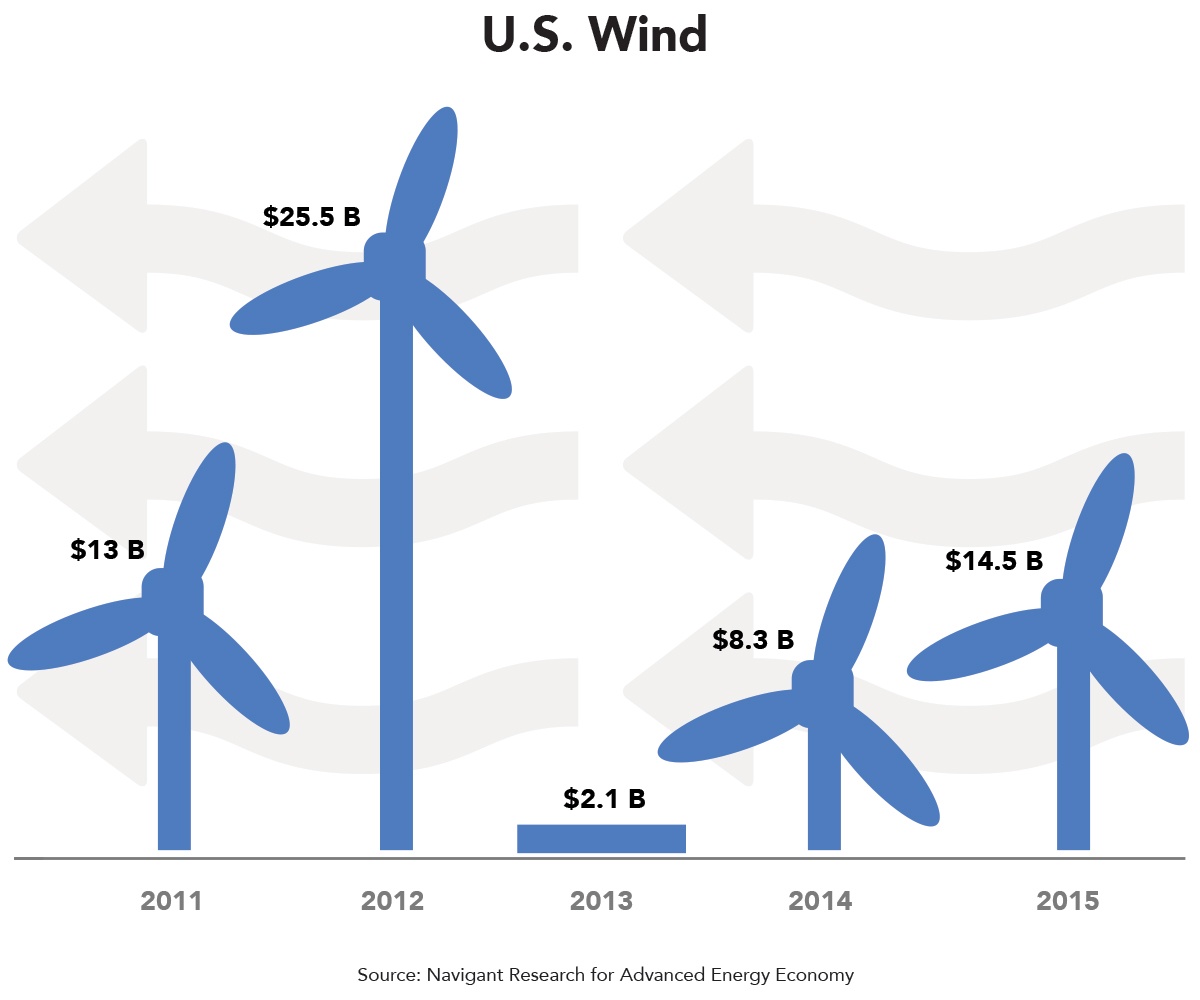
With expiration of the production tax credit (PTC), the wind industry in the United States raced to commence construction on projects before the 2014 end-of-year cutoff of eligibility. As a result, more than 8.5 GW of wind power was brought online in 2015, producing revenue of $14.5 billion (up 75% over 2014), with another 9.4 GW now under construction that qualified under the old rules. (See above.) Now, with the long-term extension and gradual phase-out of the PTC over the next four years, passed by Congress in December, the wind industry boom is expected to continue for the next several years. The momentum should build toward a likely PTC- driven installation peak in 2018 (due to projects that commence construction prior to January 1, 2017, securing the 100% PTC), after which PTC gradually phases out through 2019 (80% of the full PTC for projects that commence construction in 2017, 60% in 2018, and 40% in 2019). At that time, depending on natural gas pricing, the ability to further reduce wind installation costs, and the Clean Power Plan, the wind industry will likely be better able to compete head-to-head with other resources in the marketplace – as it is now already doing successfully in several regions of the country.

Read More

Topics: Advanced Energy Now Market Report

New York REV Order Gives Utilities Ways to Make Money in Changing Role

Posted by Ryan Katofsky on May 26, 2016 3:15:17 PM

nyrev-utilities-nyc-pixabay-935933-edited.jpg

We’ve blogged several times over the last two years on New York’s landmark Reforming the Energy Vision (REV) proceeding, which seeks to fundamentally reorient the way electric utilities are regulated in New York State. We have been strong supporters of this effort and, along with our state and regional partners, Alliance for Clean Energy New York and the Northeast Clean Energy Council, have filed comments at nearly every opportunity. Back in 2014, we blogged that The Devil is in the Details and later reviewed some of those details when the Department of Public Service issued its Track 2 White Paper. We also weighed in on benefit-cost analysis and, most recently, utility-solar collaboration on the future of net metering and compensation of distributed energy resources (DER). Truly, there is virtually no aspect of the regulatory framework that is not up for consideration in REV.

The details of what utility regulation will look like in New York just got clearer, when the Public Service Commission (PSC) issued its Track 2 Order on May 19. This Order addresses the fundamental issue of the utility revenue model as well as certain aspects of rate design. While there are many details still to be worked out (the Order is mainly about the framework and process), the PSC has formalized some bold ideas for how the utility business model will evolve in order to keep up with changing technology, evolving customer needs, and state energy and environmental goals.

Read More

Topics: State Policy

Search

About

Advanced Energy Perspectives is Advanced Energy United's blog presenting news, analysis, and commentary on creating an advanced energy economy. Join the conversation!

Subscribe Here!

Recent Posts

Posts by Topic

See all