Advanced Energy Technology of the Week: Utility-scale Nuclear Power

Posted by Maria Robinson on Jan 13, 2015 3:25:33 PM

The U.S. Environmental Protection Agency’s (EPA’s) plan to regulate carbon emissions is just the latest challenge facing the U.S. electric power system. Technological innovation is disrupting old ways of doing business and accelerating grid modernization. Earlier this year, AEE released Advanced Energy Technologies for Greenhouse Gas Reduction, a report detailing the use, application, and benefits of 40 specific advanced energy technologies and services. This post is one in a series drawn from the technology profiles within that report.

nuclear_-_utility_scale_2-636683-edited

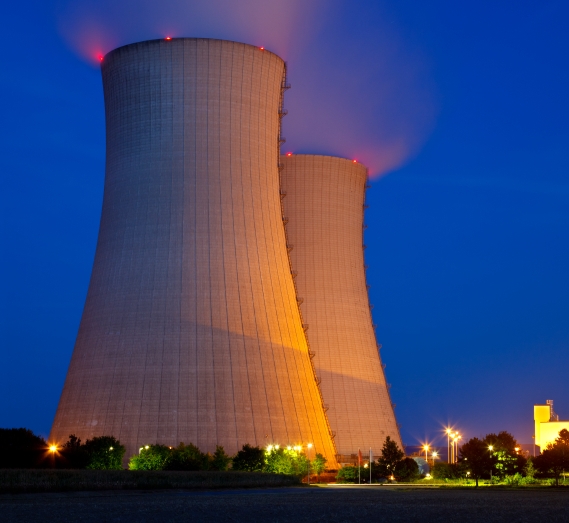
Nuclear power plants in operation today rely on nuclear fission (the splitting of heavy atomic nuclei) to produce electricity. Fission releases heat in the reactor core to generate steam, which then spins a turbine attached to a generator that produces electricity. Nuclear power, a zero-carbon emission technology, is typically used for generating baseload electricity, as it is a technology that is not easy to start and stop or cycle up and down. Newer technologies (known as Generation III or III+) offer greater reliability and extensive safety features, as well as higher efficiency, with capacity factors above 80%.

Read More

EPA GHG REGS: We Read the Comments, So You Don't Have To, Part 3: ISOs and RTOs

Posted by Frank Swigonski and Caitlin Marquis on Jan 12, 2015 3:28:00 PM

After the comment period closed on December 1, the stats were in: EPA received more than 4 million comments on the Clean Power Plan from individuals, organizations, and state regulatory bodies. By one estimate, it would take 71 people working eight hours a day from now until June to read them all. But don't worry—our Carbon Policy Analysts identified the top comments and plowed through them. This is the third of five blog posts presenting AEE’s summary of and take on comments from a few key stakeholders: federal and state regulatory organizations, states, ISO/RTOs, utilities, and industry and environmental groups. Here, we cover the reactions of ISOs and RTOs.

epa-comments-part-3-150862-edited
The chief concern of the Independent System Operators (ISOs) and Regional Transmission Organizations (RTOs) is how the Proposed Rule will affect reliability of the grid. These concerns were summarized in comments filed by the ISO/RTO Council (IRC) and signed by all nine ISOs and RTOs in the U.S. IRC proposed that the Final Rule require reliability assessments during the planning and implementation of state plans (SIPs), and that EPA should establish criteria for evaluating how SIPs will impact reliability. IRC also proposed that the Final Rule give more time to build new transmission infrastructure, not only for natural gas as proposed in the NODA, but also for electricity. Most importantly, IRC outlined a detailed proposal for an RSV, which would allow states to exceed their emission targets if reliability were threatened by an unforeseen event such as extreme weather or energy shortage.  IRC envisioned a well-defined process through which an ISO, RTO, or entity responsible for reliability would administer an RSV. The RSV process would be overseen by NERC.
Read More

NEWS: Planes, Trains, and Automobiles; Cape Wind Off the Rails?

Posted by Lexie Briggs on Jan 9, 2015 12:15:52 PM

This week, the press was abuzz with planes, trains, and automobiles – well, not planes, but definitely the others. On Monday, construction began on a much-anticipated high-speed rail line in California. In Las Vegas, self-driving and fuel cell vehicles dominated the Consumer Electronics Show. But the news this week on offshore wind was not so good, as the developer of Cape Wind got his contracts pulled out from under him. 

high_speed_rail

The California high-speed rail project groundbreaking ceremony, in Fresno, comes six years after the voters passed a bond act to provide initial funding for the project. Once complete, the rail line will connect Los Angeles and San Francisco, allowing for a three-hour commute between the Golden State’s two big cities. All aboard!

Read More

Topics: News Update

FEDERAL: GOP Takes Charge of Congress, Vowing Open Debate While Taking On the White House

Posted by Arvin Ganesan on Jan 8, 2015 11:12:24 AM

Earlier this week, Senator Mitch McConnell (R-KY) was sworn in as the Senate’s new majority leader, replacing Harry Reid (D-NV), who took his new post as the Senate Minority Leader. Republicans now control both bodies of Congress, and will challenge many of the actions from the executive branch. What should we expect from the 114th Congress?

us-capitol-photo-by-katie-harbath-698420-edited 

Everybody has seen the old Schoolhouse Rock “I’m Just a Bill” video, but we all know the legislative process is even more complicated, and could get more so. When in the minority last year, and unable to offer amendments or modify legislation, Senate Republicans decried the lack of adherence to the traditional legislative process, or “regular order.” Incoming Leader McConnell has pledged to return to an open process, by which committees author legislation under the direction of committee chairs and then the full Senate is able to amend at well. Still, it remains unclear how long McConnell will be able to maintain this process – it allows Senate Democrats to demand votes that put Republicans in difficult political positions.

Read More

Topics: Federal Priorities

Advanced Energy Technology of the Week: Marine Power

Posted by Maria Robinson on Jan 6, 2015 1:43:18 PM

The U.S. Environmental Protection Agency’s (EPA’s) plan to regulate carbon emissions is just the latest challenge facing the U.S. electric power system. Technological innovation is disrupting old ways of doing business and accelerating grid modernization. Earlier this year, AEE released Advanced Energy Technologies for Greenhouse Gas Reduction, a report detailing the use, application, and benefits of 40 specific advanced energy technologies and services. This post is one in a series drawn from the technology profiles within that report.

Marine_Power-707417-edited

Marine power technologies generate electricity from the kinetic energy contained in moving water, including waves, currents, and tides. Wave power works by harnessing the fluctuations in wave height to generate electricity, for example, with a buoy tethered to the sea floor. As the buoy moves up and down with the waves the relative motion between it and the part that is fixed to the sea floor can be captured to drive a generator.

Read More

Search

About

Advanced Energy Perspectives is Advanced Energy United's blog presenting news, analysis, and commentary on creating an advanced energy economy. Join the conversation!

Subscribe Here!

Recent Posts

Posts by Topic

See all