At Summer Break, Michigan’s Energy Legislation is Far from Settled

Posted by Liesl Eichler Clark on Jun 16, 2016 12:30:00 PM

mi-capital-Paul-Martinez-419335-edited.jpg

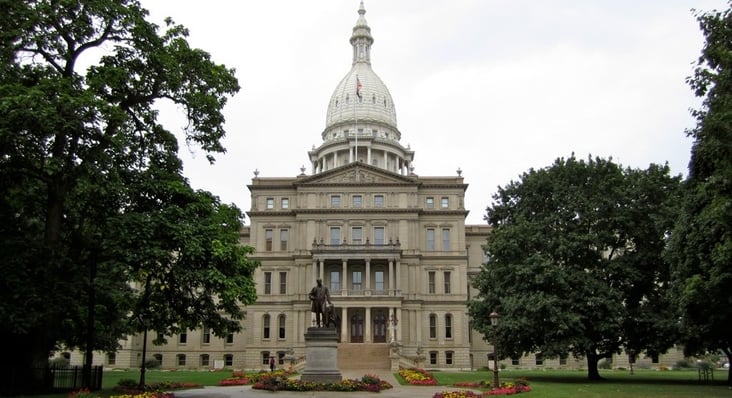
For nearly two full years, the state of Michigan has been debating its energy future. Just before Memorial Day, legislators finally took a committee vote on a comprehensive package of legislation that would have a dramatic impact on the state’s electric power system. With the legislature now adjourned for the summer, there is still much to be determined: The House has its own package and work remains to be done on the Senate floor. Much progress has been made thus far to improve these bills and provide greater market certainty for advanced energy companies. What else is needed comes down to priorities. Advanced Energy Economy and the Michigan Energy Innovation Business Council (Michigan EIBC) have four we consider key to an advanced energy future for Michigan.
Read More

Topics: State Policy

As Vehicle Sales Lag, Natural Gas Vehicle Infrastructure Sags

Posted by Frank Swigonski on Jun 15, 2016 12:30:00 PM

This post is one in a series of feature stories on trends shaping advanced energy markets in the U.S. and around the world, drawn from Advanced Energy Now 2016 Market Report, which was prepared for AEE by Navigant Research.

us-natural-gas-fueling-station-all-classes.jpg

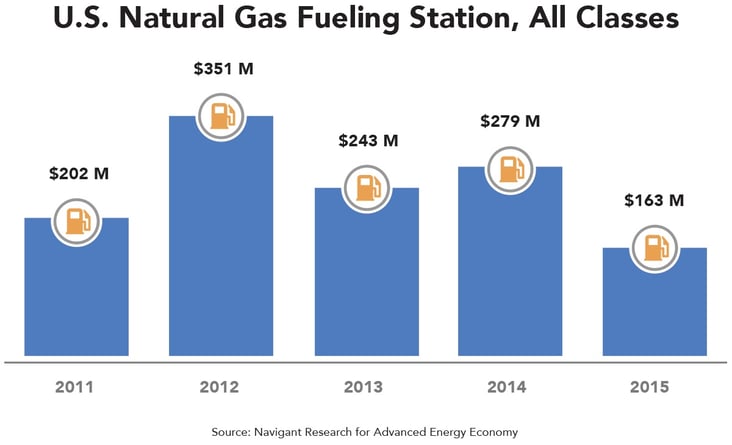
In order for any alternative to gasoline or diesel to be viable as a transportation fuel, refueling infrastructure needs to be readily available. In the arena of alternative fuels for transportation, natural gas has proven to be one of the most popular alternatives to traditional liquid fuels in many global markets. Natural gas for use as a transportation fuel is available in two forms, CNG and LNG, with the former being by far the more common. CNG is primarily used for vehicles that operate within a limited geographic region, while LNG is more commonly used for long-haul trucking applications. CNG is stored in high-pressure tanks at 3,000–3,600 psi and can be stored for extended periods of time. LNG is stored in low pressure, cryogenic tanks at -259 degrees F.

Read More

Topics: Advanced Energy Now Market Report

THIS IS ADVANCED ENERGY: High Voltage Direct Current Transmission

Posted by Caitlin Marquis on Jun 14, 2016 11:30:00 AM

This post is one in a series featuring the complete slate of advanced energy technologies outlined in the report This Is Advanced Energy.

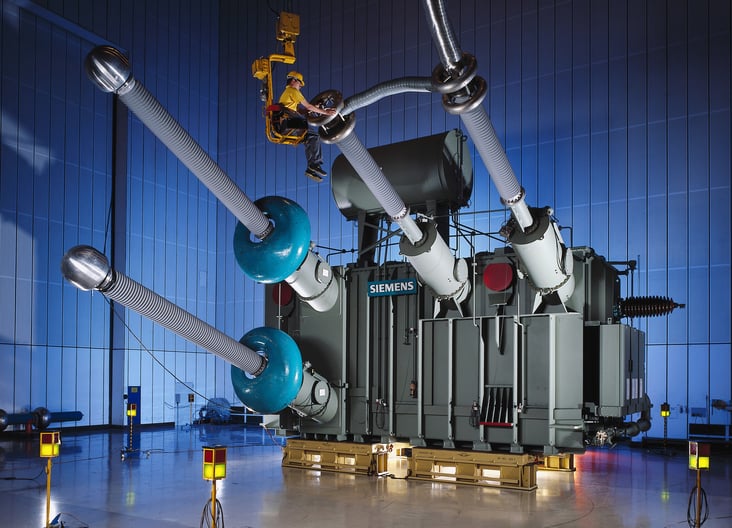
2.2_HVDC-transformer.jpg

There are two types of currents that can be used when transmitting electricity: Alternating Current (AC) and Direct Current (DC). The electric grid originally developed around AC power because it was easier to manipulate and transport ef ciently over long distances compared to DC power. Technological advancements have now made high voltage DC (HVDC) lines a viable option for long distance transmission. With HVDC, converters draw AC power from the grid and convert it to DC power. The DC power flows over the transmission line, then goes through a second conversion back into AC power before it is injected into the grid. Converters at both ends allow HVDC lines to transfer power between regional grid interconnections without disruption.*

Read More

THIS IS ADVANCED ENERGY: Microgrids

Posted by Caitlin Marquis on Jun 13, 2016 7:28:50 PM

This post is one in a series featuring the complete slate of advanced energy technologies outlined in the report This Is Advanced Energy.

2.10_Microgrid-1.jpg

A microgrid is a network of connected electricity generation assets, controls, and loads that can operate independently from a utility grid and/or easily connect to or disconnect from a utility grid. Microgrids usually range in capacity from less than 1 MW to 40 MW, and can generally be classified as customer microgrids, utility or community microgrids, or remote microgrids. Virtual microgrids link distributed generation (DG) at multiple sites. Remote and customer-owned microgrids are well-established applications, while utility, community, and virtual microgrids are emerging alongside intelligent grid technologies. In all cases, microgrids can generate, distribute, and regulate the flow of electricity to consumers at a local level.

Read More

Integrated Data Center Management is the Next Frontier

Posted by Frank Swigonski on Jun 10, 2016 2:18:28 PM

This post is one in a series of feature stories on trends shaping advanced energy markets in the U.S. and around the world, drawn from Advanced Energy Now 2016 Market Report, which was prepared for AEE by Navigant Research.

apple-data-center-north-carolina-solar.jpeg

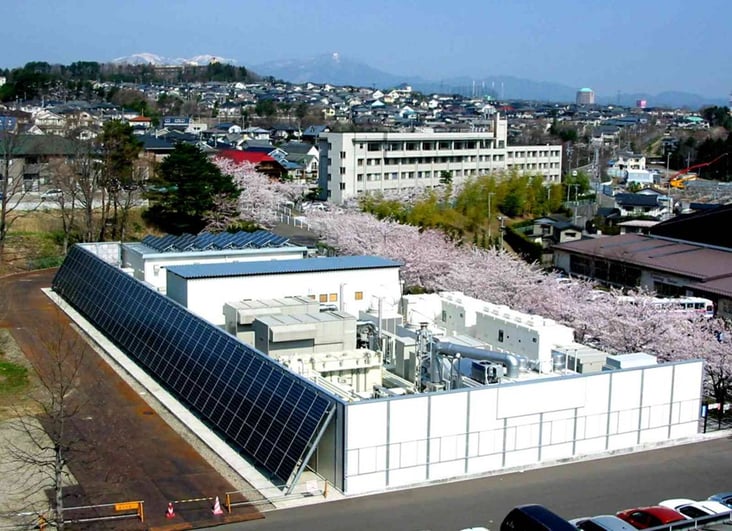
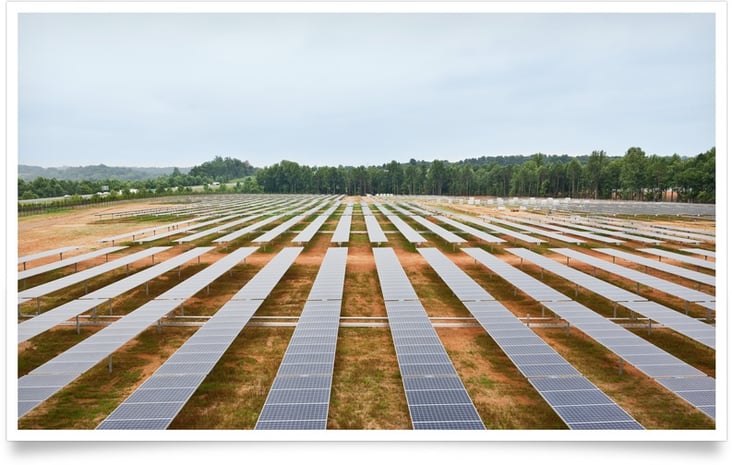
Solar panels help power a North Carolina Apple data center. 

Intelligent buildings integrate software and services to maximize energy and operational ef ciency across building systems—from HVAC to lighting and plug loads. Integrated data center energy management is the implementation of a uni ed intelligent building strategy to optimize both IT and facility resources. As building owners invest in intelligent building solutions to deliver comprehensive energy management, they have begun to look at on-site and enterprise data centers as key candidates for optimization because of data centers’ high levels of energy consumption.

Read More

Topics: Advanced Energy Now Market Report

Search

About

Advanced Energy Perspectives is Advanced Energy United's blog presenting news, analysis, and commentary on creating an advanced energy economy. Join the conversation!

Subscribe Here!

Recent Posts

Posts by Topic

See all