The U.S. Environmental Protection Agency’s (EPA’s) plan to regulate carbon emissions is just the latest challenge facing the U.S. electric power system. Technological innovation is disrupting old ways of doing business and accelerating grid modernization. Earlier this year, AEE released Advanced Energy Technologies for Greenhouse Gas Reduction, a report detailing the use, application, and benefits of 40 specific advanced energy technologies and services. This post is one in a series drawn from the technology profiles within that report.
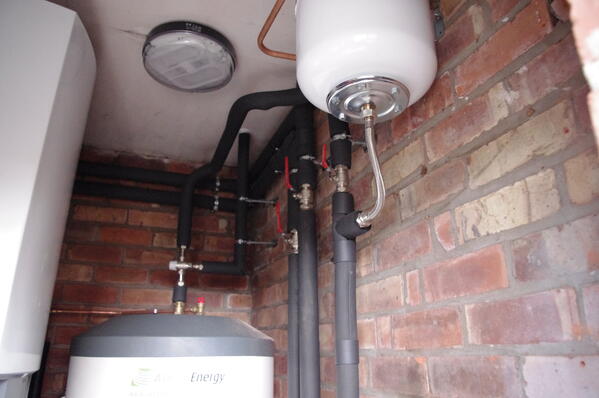
A ground-source heat pump is a heating and cooling system that exchanges heat between the earth and the interior of a building. It relies on the fact that ground temperatures tend to be constant throughout the year – this allows it to achieve higher efficiencies than air-source heat pumps, and also makes it suitable for any climate. In the winter, it transfers heat stored in the ground into a building, and in the summer, the system works like an air conditioner, transferring heat out of a building and into the ground. Ground-source heat pumps require vertical wells or horizontal loop fields to be installed to enable the heat transfer to occur. Ground-source heat pumps can also provide domestic hot water from desuperheaters, one of the heat pump’s components, and heat water for free in the summer.
 As the U.S. gets closer to a 21st century electricity system, how energy is distributed, managed, and consumed becomes just as important as how energy is generated.
 In a recent
 Call it a tale of two renewable portfolio standards (RPS). North Carolina’s renewable energy and energy efficiency portfolio standard has just scored a major investment in solar power by the state’s major utility. But in Ohio, a new law freezing that state’s renewable energy standard has already put the local solar industry in a deep freeze.