 In the latest evidence of the need for stable federal tax policy, a major solar project in California was abandoned in part due to uncertainty around whether the project would be placed in service in time to qualify for the investment tax credit (ITC), which expires at the end of 2016. Numerous tax credits for advanced energy development expired at the end of last year, and a bill to extend them has passed the Senate Finance Committee but not yet come to the floor. This abandoned solar plant shows that even a credit facing an expiration date that has not yet arrived can stymie projects with long development timelines – a problem that could be alleviated by a simple change in qualification for the tax credit from “placed in service” to “commenced construction,” as was done for the production tax credit in its most recent extension.In the latest evidence of the need for stable federal tax policy, a major solar project in California was abandoned in part due to uncertainty around whether the project would be placed in service in time to qualify for the investment tax credit (ITC), which expires at the end of 2016. Numerous tax credits for advanced energy development expired at the end of last year, and a bill to extend them has passed the Senate Finance Committee but not yet come to the floor. This abandoned solar plant shows that even a credit facing an expiration date that has not yet arrived can stymie projects with long development timelines – a problem that could be alleviated by a simple change in qualification for the tax credit from “placed in service” to “commenced construction,” as was done for the production tax credit in its most recent extension.
Topics: Federal Priorities
The U.S. Environmental Protection Agency’s (EPA’s) plan to regulate carbon emissions is just the latest challenge facing the U.S. electric power system. Technological innovation is disrupting old ways of doing business and accelerating grid modernization. Earlier this year, AEE released Advanced Energy Technologies for Greenhouse Gas Reduction, a report detailing the use, application, and benefits of 40 specific advanced energy technologies and services. This post is one in a series drawn from the technology profiles within that report.
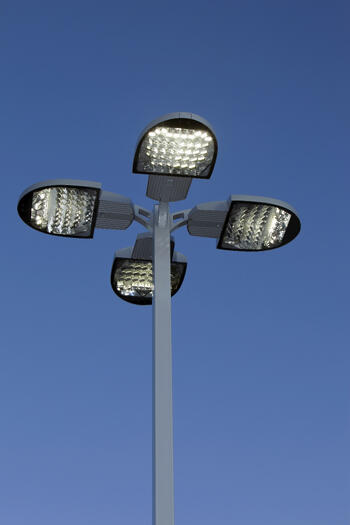 Advanced lighting technology has quickly expanded to include light-emitting diodes (LEDs), energy-saving incandescent bulbs, and compact fluorescent lamps (CFLs). Solid-state lighting, including LEDs, is in the process of transforming the lighting and electronic display markets, offering mercury-free, long-lasting, extremely efficient, digitally controllable lighting that can be used in residential and commercial settings.[1] Solid-state lighting is five to six times more efficient than incandescent bulbs and up to 1.5 times as efficient as CFLs. Intelligent lighting controls can be used in conjunction with some forms of efficient lighting, particularly LEDs, which can be dimmed or turned on/off without loss of equipment lifespan or performance. Intelligent lighting controls use environmental information (e.g., occupancy, ambient light levels) to automatically adjust light levels and save energy. At each lighting fixture, sensors detect light levels and feed the information to controllers that adjust the lighting based on previously set goals.
The U.S. Environmental Protection Agency’s (EPA’s) plan to regulate carbon emissions is just the latest challenge facing the U.S. electric power system. Technological innovation is disrupting old ways of doing business and accelerating grid modernization. Earlier this year, AEE released Advanced Energy Technologies for Greenhouse Gas Reduction, a report detailing the use, application, and benefits of 40 specific advanced energy technologies and services. This post is one in a series drawn from the technology profiles within that report.
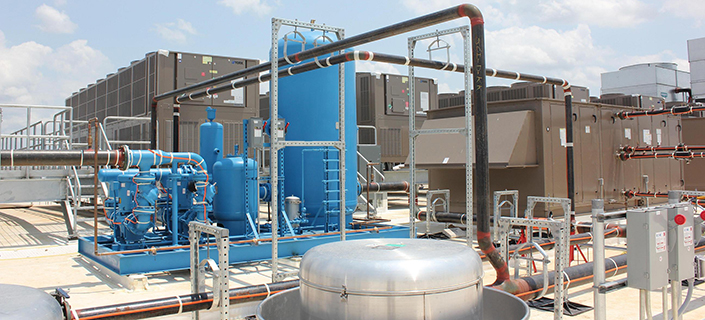
HVAC (heating, ventilation, and air conditioning) systems consist of air conditioners, heat pumps, boilers, furnaces, rooftop units, and chillers, as well as associated air handlers, ductwork, and water and steam piping. HVAC systems represent a significant portion of a building’s overall energy use. Improvements in efficiency derive from various subsystem technological innovations, such as variable speed drives (which reduce electricity use by electric motors) and increased heat exchanger surface area (which increase overall energy transfer from the fuel to the conditioned space). More advanced HVAC systems also have sensors and controls that communicate with energy management systems and other intelligent controls to further reduce energy usage.
 California’s 2014 legislative session has finally come to a close. August was a busy month in Sacramento as the Legislature worked to get bills through both houses in the final stretch, after which Gov. Brown signed them into law during the month of September. In addition to approving several bills and budget items that will improve the business climate for advanced energy companies, the Legislature also faced an attempt to push off a key milestone in the state’s climate plan.
Topics: State Policy, California Engagement
As the UN summit on climate in New York City came to a close last week, all eyes were on the United States as the world’s leading economy. Yet, those seeking action from the U.S. should actually be looking at the states and what they’re already doing. As international climate talks open up to “sub-national” participants, states may get a chance to take their rightful place among the world’s advanced energy leaders.
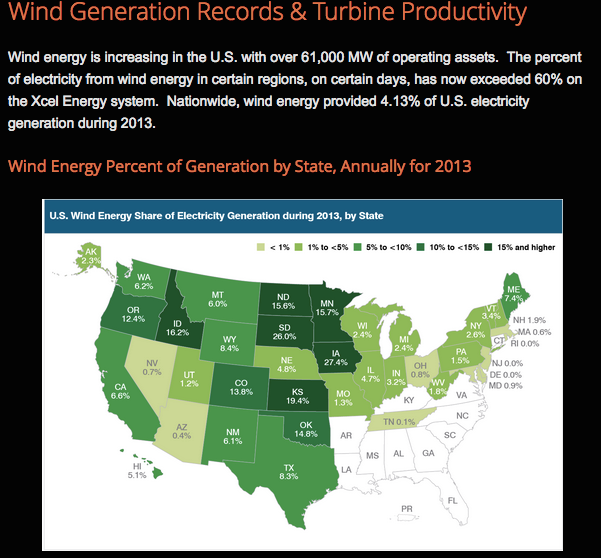
It may be hard to imagine the U.S. Senate ratifying an international agreement on climate change (which requires a two-thirds vote). But every year states around the country pass legislation to move advanced energy forward to serve a growing U.S. and global market. As documented in AEE’s Advanced Energy Technologies for Greenhouse Gas Reduction, advanced energy products and services improve the electric power system in myriad ways – and reduce emissions associated with climate change as well.
Topics: State Policy