THIS IS ADVANCED ENERGY: Voltage and Volt-Ampere Reactive Optimization

Posted by Caitlin Marquis on Sep 20, 2016 12:00:33 PM

This post is one in a series featuring the complete slate of advanced energy technologies outlined in the report This Is Advanced Energy. 

2.12_VVO.jpg

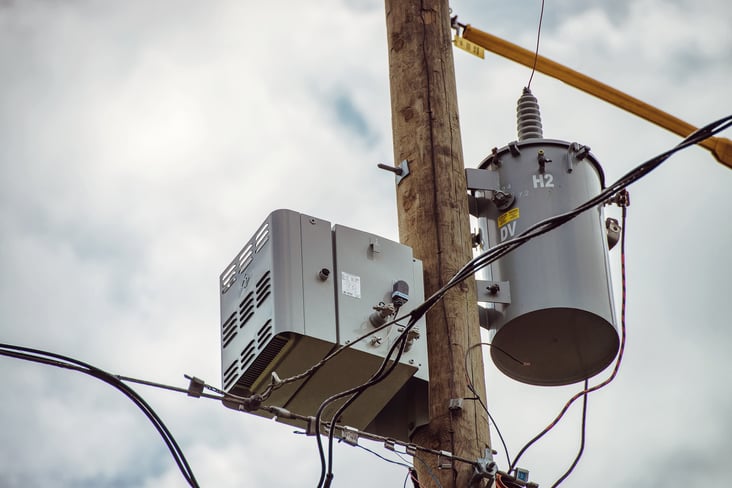
Voltage and Volt-Ampere Reactive (VAR) Optimization (VVO) is a smart grid-enabled utility application. VVO controls the flow of power on the distribution system to increase efficiency and reliability, reduce distribution energy losses, and accommodate new power flows, such as those originating from distributed generation. By providing more precise voltage control, VVO reduces total energy consumption without compromising service quality.

Read More

NEWS: Clean Diesel’s Identity Crisis; Solar’s Ongoing Tug-of-War

Posted by Lexie Briggs on Sep 16, 2016 11:58:24 AM

flickr-dailymatador-vw-cleandiesel.jpg

This week, the news is all about the complicated nature of industry. Neither good news nor bad in the advanced vehicles industry as electric vehicles continue to grow and the Dieselgate controversy continues to be, well, controversial. We’ll also check in with several states as they grapple with how to exactly to regulate (i.e., credit and/or charge customers for) distributed resources like rooftop solar.

Read More

Topics: News Update

Top 10 Utility Commission Issues of 2016 - So Far

Posted by Coley Girouard on Sep 15, 2016 11:18:06 AM

mid-year-top-ten-utility-regulatory-solar-wind.jpg

Back in January, we published a list of the top 10 public utility commission issues to watch in 2016. With 2016 heading into the home stretch, we check in on the top issues facing utility commissions so far this year. Not surprisingly, the challenges PUCs are grappling with are all over the map: sweeping changes in utility business models, utility M&A, grid modernization, rate design, smart meter data access, demand charges for residential customers, energy storage, electric vehicle charging infrastructure, to name a few. Here is a status check of the Top 10 matters before PUCs to date.  

Read More

Topics: PUCs

NARUC’s Guide to Rate Design and the Way Forward

Posted by Coley Girouard and Hannah Polikov on Sep 13, 2016 11:49:12 AM

epa-111d-clean-power-comments-states-212222-edited.jpg

The growth in distributed energy resources (DER) is enabling consumers to take charge of their energy use, while providing new tools for a more affordable, reliable, and clean grid. But the increased adoption of DER has not come without controversy. Rate design issues, from net metering to fixed-charge fees and everything in between, are popping up with increasing frequency across the country. We at Advanced Energy Economy (AEE) have been at the forefront of these conversations in a variety of different arenas—most recently leading a collaborative discussion with utilities and other key stakeholders in New England around rate design for a DER future, and our ongoing involvement in New York as part of the Reforming the Energy Vision (REV) proceeding, most recently focusing on Value of DER/Successor to Net Energy Metering discussions—grappling with these issues and convening stakeholders to establish a dialogue on the best way forward. Our affiliate, AEE Institute, also convened public utility commissioners at forums in the Midwest and Mid-Atlantic regions to discuss distribution system planning to modernize the electricity grid.

Last November, the National Association of Regulatory Utility Commissioners (NARUC) jumped into the ring and created a Staff Subcommittee on Rate Design to address  the challenges inherent in a rapidly changing electricity system. The first order of business, as stated by NARUC President Travis Kavulla, was to develop a manual to assist jurisdictions in navigating the challenges, considerations, and policy developments related to the increase in DER on the grid. Following an initial round of comments, which AEE participated in, to inform the subcommittee on what to include in the manual, NARUC issued a draft manual on DER Compensation on July 21 and convened a town hall meeting two days later, during the Summer NARUC meeting in Nashville, to receive public input. On September 2, AEE submitted comments on the draft manual, applauding NARUC and President Kavulla for developing a solid first draft, while encouraging them to make additional improvements before the final version is released in November.

Read More

Topics: PUCs

THIS IS ADVANCED ENERGY: Large-Scale Solar Photovoltaics

Posted by Caitlin Marquis on Sep 12, 2016 3:52:26 PM

This post is one in a series featuring the complete slate of advanced energy technologies outlined in the report This Is Advanced Energy. 

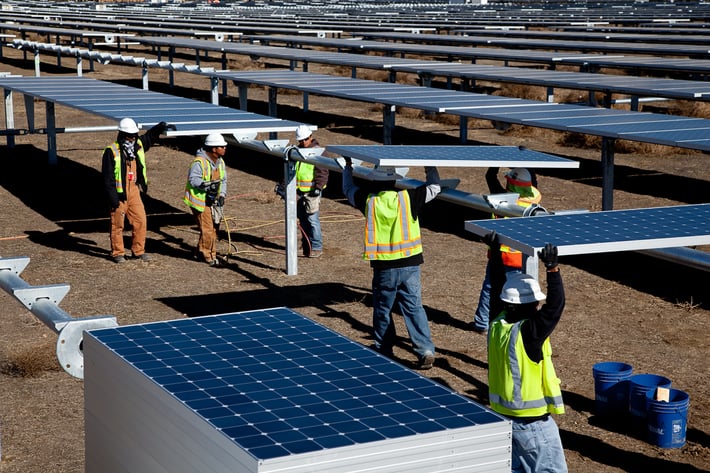
solar-farm-employees-02-©SunPower
Credit: SunPower

Solar photovoltaic (PV) power systems convert sunlight directly into electricity. PV modules (panels) produce direct current (DC), which is converted to grid-compatible alternating current (AC) through an inverter. Utility-scale PV installations are typically connected to the transmission grid, and range from about 1 MW to several hundred MW. Since PV can make use of diffuse or direct sunlight it can be installed anywhere. The majority of large solar farms use ground-
mounted at-plate PV panels, which can be installed at a fixed-tilt or can use single-axis or dual-axis tracking systems that follow the sun. Tracking increases electricity production over the course of the day, but also increases costs. Concentrating PV (CPV) is a variation on at plate PV that uses arrays of lenses mounted in front of small PV cells to concentrate the sunlight reaching the cells. CPV requires dual-axis tracking and is more efficient, but more expensive, than regular at plate PV, so it is best suited to very sunny locations.

Read More

Search

About

Advanced Energy Perspectives is Advanced Energy United's blog presenting news, analysis, and commentary on creating an advanced energy economy. Join the conversation!

Subscribe Here!

Recent Posts

Posts by Topic

See all