Proposed California Electric Vehicle Initiative Would Drive EV Sales with $3 Billion in Incentives

Posted by Steve Chadima on Jul 6, 2017 11:28:47 AM

ca-ev-incentive-364440-edited.jpg

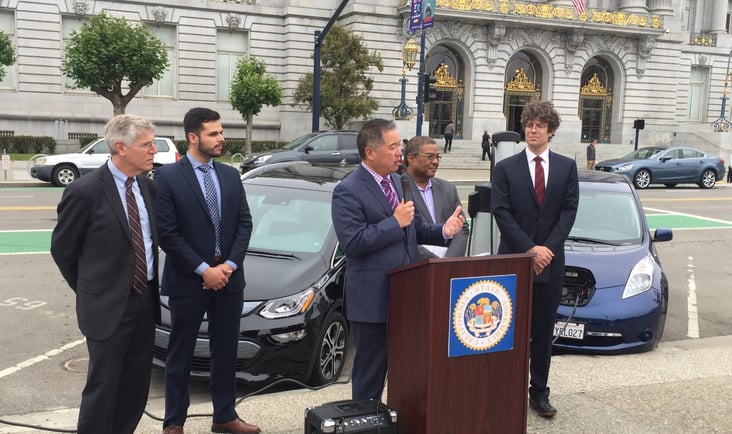
A bill co-sponsored by AEE to give a boost to electric vehicles in California got a boost itself last week with a well-covered press conference highlighting the measure, which would establish an ambitious program to stimulate EV purchases. The bill’s author, Assemblymember Phil Ting, hosted the press event at a set of charging stations across from San Francisco City Hall. “We need a more robust incentive program to jump-start the market so that everyone can get behind the wheel of an electric vehicle,” said Ting. His bill, AB 1184, is intended to do just that – backed by a pool of up to $3 billion for EV-buying incentives.

Read More

Topics: State Policy, California Engagement

In Michigan, Wind Equals Economic Opportunity

Posted by Liesl Eichler Clark on Jun 29, 2017 1:10:00 PM

This is a guest post from AEE’s state partner, Michigan Energy Innovation Business Council. To learn more about MiEIBC, click here. To learn more about AEE’s nationwide coalition of state and regional partners, click here. 

wind-michigan-Sebewaing, MI-George Thomas.jpg

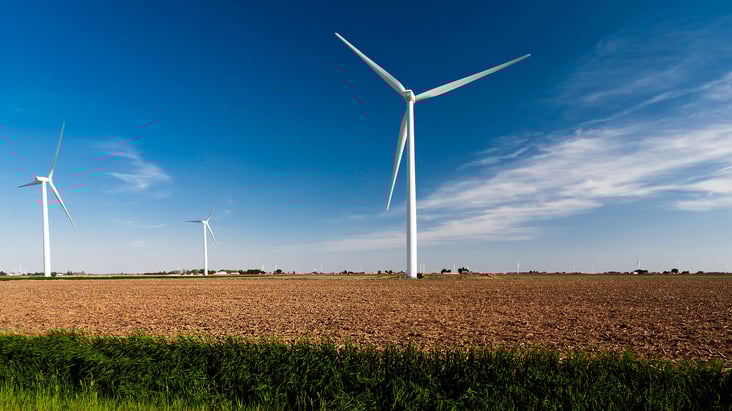
What industry hires veterans at a rate 50% higher than the national average, boasts the fastest growing job category in the nation, and is expanding in Michigan? If you guessed wind energy, you’re right. Like everywhere else, Michigan’s energy mix is changing due to improvements in technology, evolving market conditions, and energy policies that lead the way forward, taking advantage of opportunities. The modern electric grid has served us well, but like other infrastructure in the country, it can be improved with new technologies – advanced energy technologies. Last year, Michigan was considering giving up on advanced energy, but instead doubled down, increasing its renewable portfolio standard from 10% to 15% and extending its energy efficiency standard through 2021. Now, fair winds are blowing – and Michigan is reaping the benefits.

Read More

Topics: State Policy, Guest Post

With Passage of SB 90, the Forecast for Solar in Florida Gets Sunnier

Posted by Maria Robinson and Ted MacDonald on May 25, 2017 11:40:44 AM

mickey-mouse-solar-086919-edited.jpg

The Sunshine State is finally living up to its nickname. In early May, both chambers of the Florida legislature passed SB 90, the implementing legislation for Amendment 4. With Florida state government currently tied up in budget deliberations, SB 90 has not yet been delivered to Gov. Rick Scott. Once it has been, he will have 15 days to sign the bill or let it become law without his signature. With the mechanics for implementation nailed down, the constitutional amendment will extend important property tax exemptions for renewable energy installations, including solar, on both commercial and residential properties. Florida has long been a sleeping giant for the solar industry. Although it ranks third nationally in solar potential, the state is currently 15th in installed capacity. With passage of SB 90, Amendment 4 will fulfill its promise – and open up the market for solar in Florida, which is poised for takeoff.

Read More

Topics: State Policy

Can a California Electric Vehicle Initiative Modeled on the State’s Successful Solar Program Electrify the EV Market?

Posted by Emilie Olson and Amisha Rai on May 9, 2017 4:47:21 PM

ev-charging-ford.png

California has longstanding vehicle electrification goals in place. The state is actively implementing its ambitious Zero-Emission Vehicle (ZEV) mandate and is hoping to reach Gov. Brown’s goal of 1.5 million ZEVs on the road by 2025. While more Californians are choosing cleaner, more fuel-efficient vehicles, challenges remain. The California Air Resources Board (CARB) estimates that by 2030, 5 million vehicles will need to be on the road to reach the state’s greenhouse gas emission (GHG) reduction goals. Although leading nationally with at least 225,000 electric vehicles (EVs) now on the road, California falls woefully short in trajectory to meet its target. To address this challenge, AEE is co-sponsoring AB 1184, a bill authored by Assemblymember Phil Ting, which would create the California Electric Vehicle Initiative (CEVI). Modeled on the successful California Solar Initiative, which brought the solar industry to cost-competitive scale in the Golden State, CEVI aims to simultaneously tackle three critical elements of the transportation electrification equation: customer adoption, stable long-term funding, and build-out of charging infrastructure.

Read More

Topics: State Policy, California Engagement

New York’s Transition from Net Energy Metering Offers a New Way to Value Distributed Resources, but Raises Concerns about RECs

Posted by Ryan Katofsky and Danny Waggoner on Apr 27, 2017 1:49:47 PM

nyc-solar-david-reeves-328078-edited.jpg

If you’re a regular reader of Advanced Energy Perspectives then you know that we’ve written several times on New York’s groundbreaking Reforming the Energy Vision (REV) proceeding. We’ve also written about rate design and efforts around the country to address net energy metering (NEM). Some NEM reform efforts are better than others. In some cases, utilities have been seeking to raise fixed charges on NEM customers or to impose per-kW monthly demand fees, arguing that NEM customers are not paying their fair share of the costs of the grid. These charges reduce the attractiveness of onsite distributed generation (DG) by shifting utility revenue collection from volumetric charges (per kWh) to monthly charges that cannot be reduced with onsite generation. In our view, such approaches are overly focused on maintaining certainty of revenue for utilities, and as a result fail to adequately consider the value of DG to the grid, such as deferring or avoiding future investments in generation, transmission, and distribution assets.

New York, under its Reforming the Energy Vision (REV) process, is taking a different approach. In its recent order on the Value of Distributed Energy Resources (DER), New York’s Public Service Commission (PSC) put forth an innovative structure for valuing the benefits of electricity from DG that is exported to the grid (and which, under traditional NEM, would be credited at the retail rate). But the order also revealed some problematic features of New York’s treatment of onsite renewable energy generation and the value of its environmental attributes – features worth revisiting as the Value of DER proceeding continues.

Read More

Topics: State Policy

Search

About

Advanced Energy Perspectives is Advanced Energy United's blog presenting news, analysis, and commentary on creating an advanced energy economy. Join the conversation!

Subscribe Here!

Recent Posts

Posts by Topic

See all