
This week, the falling price of oil (and consequently gasoline) took over energy news in many outlets. But there was also news of a certain other energy price coming down. “Solar electricity is on track to be as cheap or cheaper than average electricity-bill prices in 47 U.S. states” by 2016 and all 50 by 2020, wrote Tom Randall in Bloomberg. His article, “While You Were Getting Worked Up Over Oil Prices, This Just Happened to Solar,” cites an analyst report from Deutsche Bank. The report assumes that the U.S. maintains the current investment tax credit, which is set to expire in 2016. Even if the ITC drops from 30 percent to 10 percent, however, 36 states would reach parity. The report also points out that solar is already there in the nation’s top 10 states for solar generation.
 Energy storage was in the news this week, with new market entrants reported and storage’s value touted – but also questioned. AEE Member company Enphase announced this week that it had not only created a solar microinverter that is so technologically advanced that it “was not even possible to do when we started the company,” according to Paul Nahi, Enphase’s CEO, but is also
 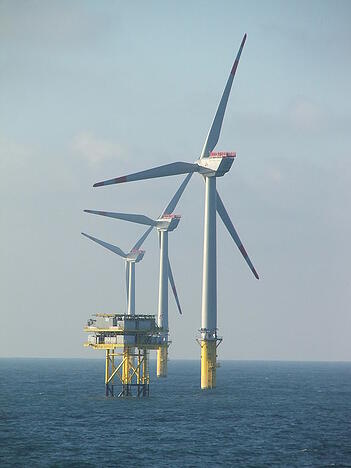 Everybody, hold onto your hats. The moment we have been waiting for may have finally arrived – or, well, it’s not very far off. American offshore wind is on the horizon, figuratively and literally, and approaching fast.
 As the U.S. gets closer to a 21st century electricity system, how energy is distributed, managed, and consumed becomes just as important as how energy is generated.
 Call it a tale of two renewable portfolio standards (RPS). North Carolina’s renewable energy and energy efficiency portfolio standard has just scored a major investment in solar power by the state’s major utility. But in Ohio, a new law freezing that state’s renewable energy standard has already put the local solar industry in a deep freeze.