 As the deadline for comment on the EPA’s proposed Clean Power Plan approaches, more and more states are seeking input from stakeholders. In drafting their comments, the state utility commissions and air regulator offices have taken different approaches: some are holding formal public hearings, some are accepting public comments, and some are conducting private or invitation-only stakeholder meetings. AEE is tracking the comment drafting process in our 23 partner states, plus Texas and Florida. We have already submitted comments with our partners in Arkansas, Ohio, and Virginia, and we submitted our own set of comments in Florida.
In Texas, stakeholders began holding invitation-only meetings attended by the Texas Commission on Environmental Quality (TCEQ), Texas Public Utilities Commission (PUC) and Texas utilities and power producers. Donna Nelson, Chair of the PUC, publicly questioned the future of Texas’ deregulated energy market. “There’s almost nothing in this rule that there could be any other outcome other than the junking of the competitive market,” she said. The CEO of Luminant, Texas’ biggest retail power generator, Mac MacFarland said that the proposed rule “not only overestimates the feasible efficiencies at existing power plants, but also the called-for steep increase in renewable energy sources. The plan disproportionately impacts Texas, and, in our opinion, it oversteps the law.”
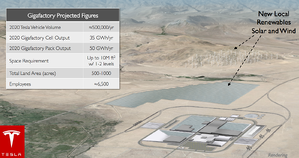 In a press conference Thursday afternoon, Nevada Governor Brian Sandoval and Tesla Motors CEO Elon Musk announced that the company’s groundbreaking battery manufacturing facility (called a “Gigafactory”) will be located in Nevada. Shortly after Tesla
  Congress will return to Washington on Monday, but expectations for action are low. With the mid-term elections two months away, Congress will be in session for only 12 days in September and October this year. It’s likely most major issues will be punted until the lame duck session in November. To avoid another government shutdown, Congress is
  Demand Response (DR) is a mechanism that allows utilities to provide customers with information and incentives that encourage customers to reduce energy usage at specific times of the day or year. This gives customers more control over their energy usage and costs, while providing valuable services to grid operators, namely load reduction during peak hours, when electricity is expensive or when grid reliability is compromised. Demand response customers may implement control technology that automatically responds to price or other signals, or customers may respond to a demand response request manually.
 Until recently, investors have looked askance at “corporate sustainability” efforts, viewing them as more public relations than investment, and environmental advocates sometimes seeing them as less than sincere (“greenwashing”). But more and more, corporate investment in advanced energy is going straight to the bottom line. Case in point: the deal announced this week between two AEE members – Verizon and SunPower.