
On Nov. 5, we submitted to the Environmental Protection Agency AEE’s comments on the Clean Power Plan. As we testified in the Agency’s hearing in July, AEE supports the Clean Power Plan, because we see it as a vital step toward modernizing the U.S. electric power system for greater efficiency, reliability, and economic opportunity. Compliance with the Clean Power Plan may be complicated, but with all the technologies available and all the flexibility allowed for individual states to develop plans that make sense for them, EPA’s state targets for reduced greenhouse gas emissions will be easy to achieve. In our comments, what we told EPA is this: Advanced energy can contribute much more to emission reduction than the draft of the Clean Power Plan contemplates, and provide economic benefits at the same time.
The U.S. Environmental Protection Agency’s (EPA’s) plan to regulate carbon emissions is just the latest challenge facing the U.S. electric power system. Technological innovation is disrupting old ways of doing business and accelerating grid modernization. Earlier this year, AEE released Advanced Energy Technologies for Greenhouse Gas Reduction, a report detailing the use, application, and benefits of 40 specific advanced energy technologies and services. This post is one in a series drawn from the technology profiles within that report.
 Ever since California’s Public Utilities Commission announced a new energy storage mandate last year, the storage market in California has exploded. Last week, Southern California Edison (SCE) announced that it would acquire 250 MW of energy storage system as part of a larger plan to acquire 2,221 MW of new generation assets. This week we learned more details of SCE’s overall plans for the future of its energy storage.
Topics: News Update
Last week’s elections mean changes in Congressional leadership and a possible policy shift for advanced energy. Read on for AEE’s analysis of what the elections could mean for advanced energy policy, both in the short and long term.
 When the 114th Congress convenes in January, newly Republican leadership in the Senate will likely entail a priority shift towards fossil fuels for the next Congress. Prior to winning a hard-fought election battle in coal-rich Kentucky, incoming Senate Majority Leader Mitch McConnell vowed to roll back the carbon pollution standards issued by the EPA. Alaska Senator Lisa Murkowski, who will chair the Senate on Committee Energy and Natural Resources, is expected to push for movement on the Keystone XL pipeline, natural gas and oil exports and onshore and offshore oil drilling. Other newly appointed chairs include Oklahoma Senator Jim Inhofe of the Senate Environment and Public Works Committee, Utah Senator Orrin Hatch of the Senate Finance Committee and Mississippi Senator Thad Cochran of the Senate Appropriations Committee. In the House, Rep. Paul Ryan will likely replace retiring Rep. Dave Camp as the new Chairman of the House Ways and Means Committee.
Topics: Federal Priorities
The U.S. Environmental Protection Agency’s (EPA’s) plan to regulate carbon emissions is just the latest challenge facing the U.S. electric power system. Technological innovation is disrupting old ways of doing business and accelerating grid modernization. Earlier this year, AEE released Advanced Energy Technologies for Greenhouse Gas Reduction, a report detailing the use, application, and benefits of 40 specific advanced energy technologies and services. This post is one in a series drawn from the technology profiles within that report.
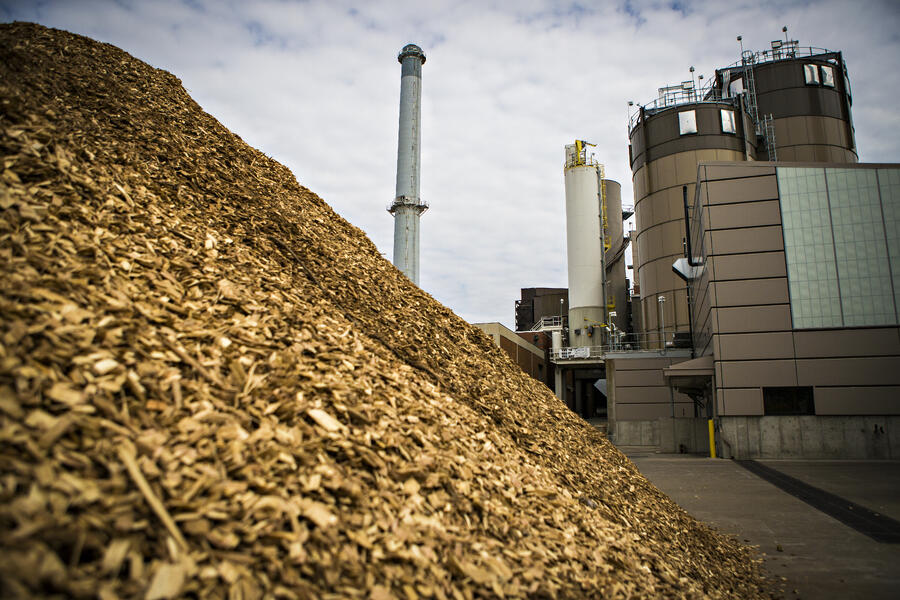
Solid biomass has been used as fuel in power plants for many decades. The dominant technology is direct combustion in which biomass is burned in a boiler to generate high-pressure steam, which is used to turn a steam turbine-generator set. Other technologies also exist, such as gasification, in which the biomass is first converted to a synthesis gas that can be burned in boilers, reciprocating engines and gas turbines. Solid biomass resources include logging and agriculture residues, forest products residues such as sawdust, bark and spent pulping liquors, as well as dedicated energy crops, both woody and herbaceous.