During this year’s lame duck Congress has a very lengthy list of “must pass” bills on its agenda, including extending crucial tax provisions that expired at the end of 2013. Among these expired tax provisions are key incentives for wind, solar, efficiency investments, and renewable fuels. Passage of this bill now is essential to allow filers to claim the tax benefit on this year’s tax filings. But right now, tax extender legislation is on the rocks.
FEDERAL: Tax Extenders on the Rocks – with Action Alert
Topics: Federal Priorities
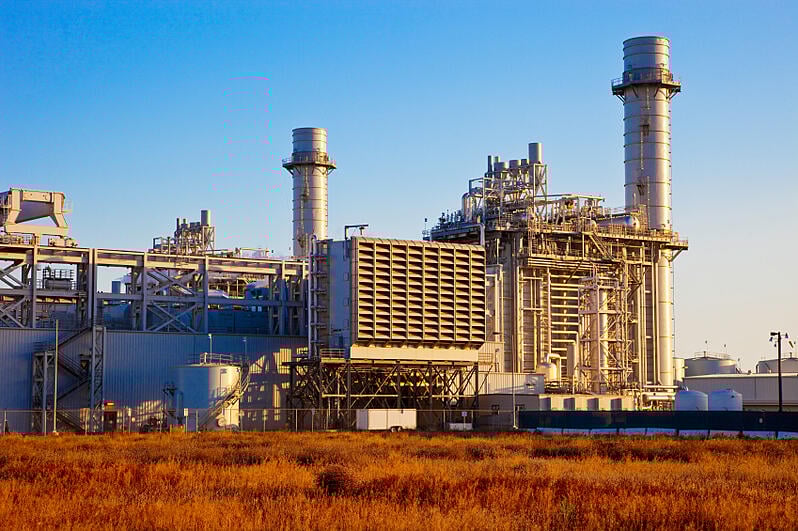
Advanced Energy Technology of the Week: Gas Turbines (Simple Cycle and Combined Cycle)
The U.S. Environmental Protection Agency’s (EPA’s) plan to regulate carbon emissions is just the latest challenge facing the U.S. electric power system. Technological innovation is disrupting old ways of doing business and accelerating grid modernization. Earlier this year, AEE released Advanced Energy Technologies for Greenhouse Gas Reduction, a report detailing the use, application, and benefits of 40 specific advanced energy technologies and services. This post is one in a series drawn from the technology profiles within that report.

Gas turbine technology is mature and in wide use. In its most basic configuration – the simple cycle gas turbine (SCGT) – air is compressed, mixed with fuel (most frequently natural-gas), and the mixture is burned in a combustor. The resulting hot, pressurized gases are expanded through a turbine that drives the compressor and an electric generator. SCGTs have conversion efficiencies of up to about 40%. In a combined cycle gas turbine (CCGT) plant, the hot exhaust gases leaving the turbine pass through a heat recovery steam generator, which produces high-pressure steam that drives a steam turbine connected to a generator, producing more electricity with no additional fuel input. This increases overall electrical efficiency to nearly 60%, making CCGTs the most efficient conventional power plants available.
CPS Energy seeking partners to test “grid of the future,” bring more value to customers
This post was originally published on Energized, CPS Energy's blog, and is reposted here with permission.

“Architecture specific, vendor neutral.”
That was the key message from Raiford Smith, CPS Energy’s vice-president of corporate development and planning, to more than two dozen companies, ranging from Fortune 500 firms like Microsoft, Siemens, AT&T, Verizon and Rackspace, to fast-growing, new-energy economy companies like Omnetric, EnerNOC, OPower and Nest Labs, which gathered in San Antonio recently to discuss potential partnerships.
Topics: Guest Post
Advanced Energy Technology of the Week: Fuel Cells
The U.S. Environmental Protection Agency’s (EPA’s) plan to regulate carbon emissions is just the latest challenge facing the U.S. electric power system. Technological innovation is disrupting old ways of doing business and accelerating grid modernization. Earlier this year, AEE released Advanced Energy Technologies for Greenhouse Gas Reduction, a report detailing the use, application, and benefits of 40 specific advanced energy technologies and services. This post is one in a series drawn from the technology profiles within that report.

A fuel cell generates electricity by electrochemical reaction, converting the chemical energy in fuel into electricity without combustion. It relies on the same principle as a battery except that the reactants are fuel and air (or pure oxygen), as opposed to the chemicals stored in a battery. Most fuel cells utilize hydrogen as fuel, with water and heat the only byproducts. With natural gas the main source of hydrogen widely available, fuel cell power plants also contain equipment for “extracting” hydrogen from natural gas through a process called steam reforming. Other fuels that have been used with fuel cells include biogas (e.g., from landfills or anaerobic digestion), and for transportation or portable applications, methanol, ethanol, and even gasoline and diesel. Fuel cells are efficient uses of fuel for electricity generation, especially compared to onsite diesel or gas generators, with conversion efficiencies approaching 60%.
EPA GHG REGS: Post-Election State Roundup on the Clean Power Plan

The midterm election saw energy and environment issues play front-and-center in many campaigns--but now that the votes have been cast, the implications of campaign rhetoric remain uncertain. Amid discussion of Keystone XL, LNG exports, and possible compromise on energy efficiency legislation is speculation that the GOP-controlled Senate may target the EPA’s Clean Power Plan. At the state level, several gubernatorial transitions could also have implications for the implementation of the plan.