This post is one in a series of feature stories on trends shaping advanced energy markets in the U.S. and around the world, drawn from Advanced Energy Now 2016 Market Report, which was prepared for AEE by Navigant Research.
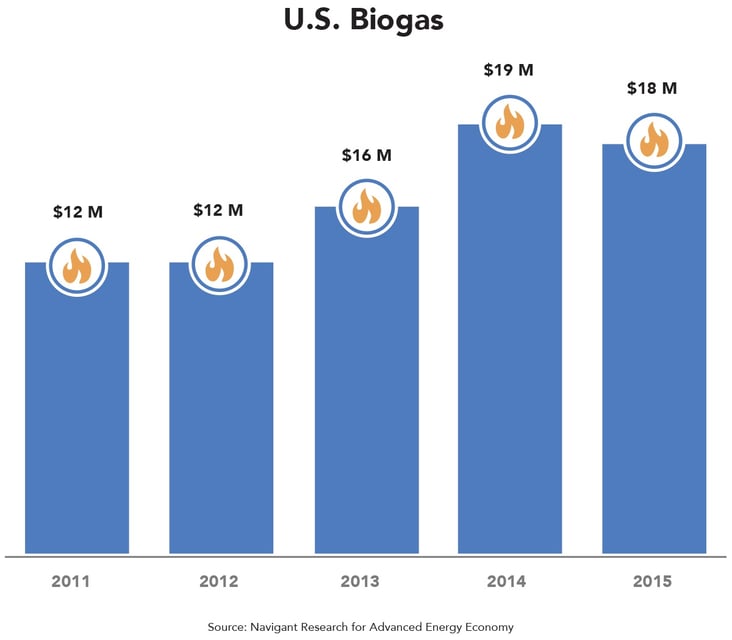
Biogas for commercial use is a product of anaerobic digestion, a method in which microorganisms break down organic matter in an oxygen-starved environment, and one of the oldest processing technologies. It is captured in modern land fills (land fill gas, or “LFG”) and biodigesters, which treat a range of organic waste streams. While biogas is a combination of gases and other volatile impurities, its main component (50% to 70%) is methane (CH4), the same as natural gas. As such, biogas can be combusted to produce electricity and heat. It can also be upgraded to pure biomethane or renewable natural gas (RNG) through the process of removing the impurities and other gases, making it suitable for transport by pipeline or compressed to fuel CNG vehicles.