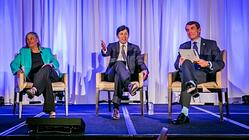
 “We will not grow our economy in spite of our climate goals, but because of our climate goals.” That was the message from Kish Rajan, director of the Governor’s Office of Business and Economic Development, to the nearly 300 business and government leaders gathered in Sacramento August 6 to discuss the “Pathway to 2050” for energy and climate in California.
With the subtitle “delivering on the promise,” the second annual Pathway to 2050 event featured speakers and panels addressing subjects ranging from financing options for disruptive technologies to utility business model and regulatory reform, all geared toward accelerating advanced energy business growth to meet California’s goal of 80 percent reduction in greenhouse gas emissions by 2050.
 In our ongoing efforts to build an advanced energy economy, we go through moments of drama. But some of the most important work we do takes place during periods of relative quiet – building relationships, documenting economic value, and demonstrating public support. I started thinking about that after a long phone call with Ivan Urlaub, executive director of the North Carolina Sustainable Energy Association (
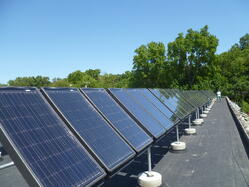 In states around the country, there have been attacks on the net metering policies that support distributed resources, primarily solar power systems. Utilities claim these policies give solar system owners a pass on paying for the infrastructure that connects them to the grid. Advocates claim that net metering gives solar system owners appropriate compensation, on a kW-hour for kW-hour basis, for the excess generation they provide to the grid by offsetting electricity they get from the grid when the sun’s not shining.