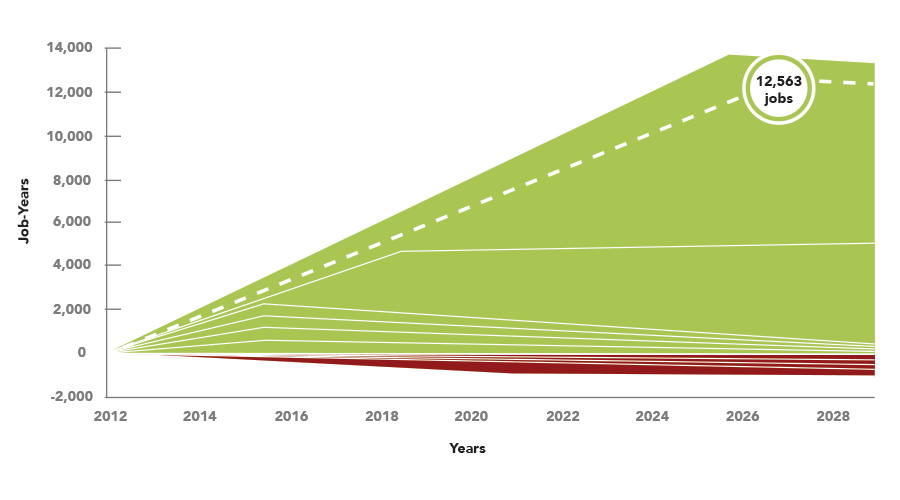
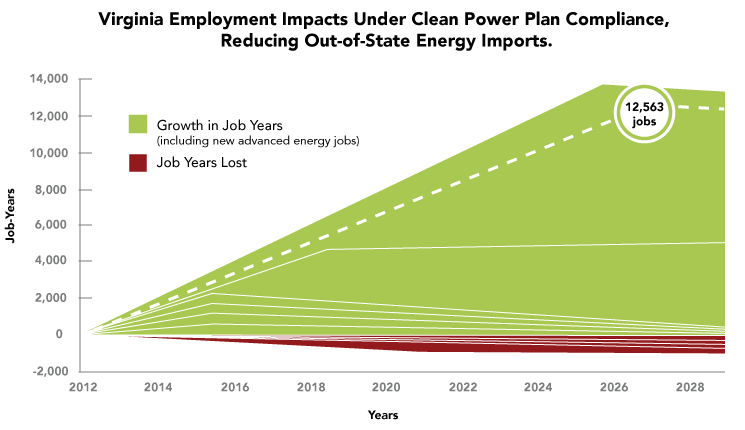
INFOGRAPHIC: Virginia Employment Impacts Under Clean Power Plan Compliance, Reducing Out-of-State Energy Imports

Posted by Lexie Briggs on Apr 19, 2015 11:00:00 AM

Prepared by Meister Consultants Group for the Advanced Energy Economy Institute and the Virginia Advanced Energy Industries Coalition, Assessing Virginia’s Energy Future: Employment Impacts of Clean Power Plan Compliance Scenarios analyzes two possible scenarios for Virginia’s compliance with the U.S. EPA’s Clean Power Plan to reduce carbon emissions from the electric power sector. 

The topline finding is quite simple: Virginia could create thousands of permanent and temporary construction jobs by implementing the CPP, and double the number of jobs if the Commonwealth chooses to pursue a goal it has considered for a long time – producing within the state all the electricity needed to power the Virginia economy, instead of importing nearly 40 percent from out of state. Achieving self-sufficiency in electricity generation while meeting EPA emissions standards would create 122,000 job-years of additional employment over the next 15 years, with net new jobs peaking at nearly 12,600 in 2029.figure-10-va-jobs-report
Read More

Topics: State Policy

In Virginia, Clean Power Plan Can Create Thousands of Jobs – Even More, if Self-Sufficiency Is the Goal

Posted by JR Tolbert on Apr 16, 2015 4:55:00 PM

Last week, Advanced Energy Economy Institute (AEEI) and the Virginia Advanced Energy Industries Coalition (VAEIC) released a new report, “Assessing Virginia’s Energy Future,” which measures the employment outcomes of two potential Clean Power Plan (CPP) compliance strategies that the Commonwealth might consider. The topline finding is quite simple: Virginia could create thousands of permanent and temporary construction jobs by implementing the CPP, and double the number of jobs if the Commonwealth chooses to pursue a goal it has considered for a long time – producing within the state all the electricity needed to power the Virginia economy, instead of importing nearly 40 percent from out of state. It will be up to Gov. Terry McAuliffe and the General Assembly to choose which course to take.

VIRGINIA EMPLOYMENT IMPACTS BY YEAR; ENERGY IMPORT REDUCTION SCENARIO

Green area: New advanced energy job years; Red area: Job years lost

figure-10-va-jobs

The two scenarios examined in the report are “Diversified Portfolio” and “Import Reduction” pathways. Both options are built on a baseline established by the state’s investor-owned utilities via the Integrated Resource Planning process. Even the plans submitted by the utilities have old, inefficient coal-fired power plants retiring, based on economic factors. These retirements will get Virginia much of the way to the emissions target set by the EPA in its proposed plan.

Read More

Topics: State Policy

North Carolina is Leading the Charge for Customer Access to Renewable Energy

Posted by Anna Giovinetto on Apr 2, 2015 2:22:12 PM

nc-sunrise-824409-edited

Renewable energy is becoming mainstream, thanks to falling costs and rising consumer interest. State renewable portfolio standards (RPS), which diversify the energy mix by requiring utilities to obtain a percentage of their generation from renewables, have played a major role in increasing deployment of renewable energy, and continue to be an important driver. Recently, a new source of demand has emerged: corporations that want to get the energy they use from renewable sources.

Read More

Topics: State Policy

In Minnesota, Xcel Energy Proposes Performance-Based Rates, But With a Catch or Two

Posted by Tom Plant on Mar 26, 2015 11:15:00 AM

sait-paul-mn-capitol-energy

In Minnesota, the state’s leading utility is pushing legislation that would create performance-based rates. This would adjust the utility’s revenue model to align with the state’s energy policy objectives, protecting the utility’s business interests while giving customers the benefits of a more efficient, cleaner, and more distributed electricity system utilizing advanced energy. The proposal puts Xcel out ahead of regulatory reform efforts in Minnesota – some say too far ahead.

Read More

Topics: State Policy

Time Varying Rates: An Idea Whose Time Has Come?

Posted by Coley Girouard on Mar 12, 2015 1:33:00 PM

jim-judd-phoenix-at-night-time-varying-rates-791263-edited

At most times of the year, much of the electricity generating capacity in the United States stands idle. In fact, on average we use less than half of the available capacity.That’s because the electric power system is built to handle demand at its peak - those few sweltering summer days when everyone’s AC is running full blast. What utilities pay for power at those times of peak demand drives up the price we pay for electricity around the clock and all year long. One way to reduce spikes in demand is with rates that vary by time of use. By pricing electricity higher at times when demand typically peaks, consumers large and small have an incentive to reduce their electricity use when it matters most to the power grid - reducing the costs of the system overall.

Read More

Topics: State Policy, PUCs

Search

About

Advanced Energy Perspectives is Advanced Energy United's blog presenting news, analysis, and commentary on creating an advanced energy economy. Join the conversation!

Subscribe Here!

Recent Posts

Posts by Topic

See all