Six Simple Policies that Can Give Corporate Purchasers the Advanced Energy They Want — and 11 States that Would Benefit Most from Adopting Them

Posted by Caitlin Marquis on Aug 11, 2016 1:30:00 PM

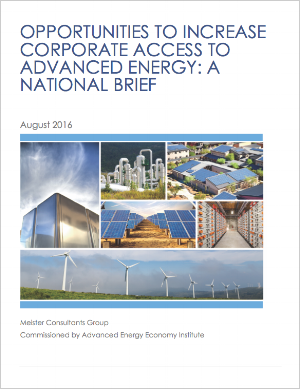
Meister-Report-A2R-456153-edited.pngIt’s no mystery that companies want advanced energy—they’re announcing major projects, making large purchases, and setting public goals. Even for companies without a specific target, advanced energy presents an attractive option to control and lower energy costs. Unsurprisingly, companies are pursuing advanced energy in growing numbers, with a record 3,100 MW of wind power purchases in 2015 signed by corporate customers—double the previous year.

But as companies sign power purchase agreements, build rooftop solar installations, install energy storage solutions, and develop fuel cell facilities, impressive national growth trends obscure the important fact that, in many states, the options to pursue such projects are limited at best. To identify how and where the list of purchasing options could be expanded, Advanced Energy Economy Institute commissioned Meister Consultants Group (MCG) to consider opportunities to increase corporate access to advanced energy through policy changes at the state level. What MCG found is six policies that would give corporate purchasers the renewable energy they are looking for, and 11 states that could reap the benefits of the advanced energy development that would result.
Read More

Topics: State Policy

Fitch Report Sends Utilities Barking Up the Wrong Tree

Posted by Ryan Katofsky and Bob Keough on Aug 4, 2016 11:48:08 AM

resi-solar-ee-re-805107-edited.jpg

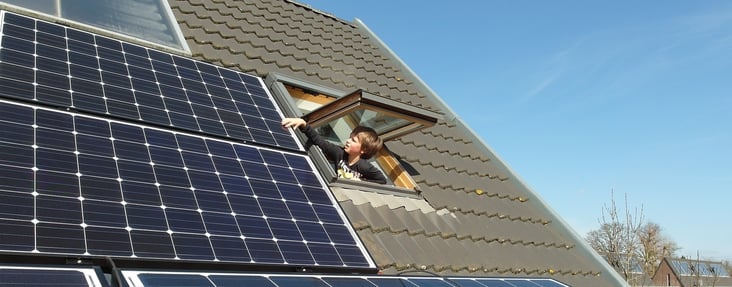
Fitch Ratings released a report last month analyzing the impact of rooftop solar and net metering on the creditworthiness of Investor Owned Utilities (IOUs), and the takeaway seems geared to raise alarm. In short, Fitch states that distributed solar, and especially net metering for solar owners, pose a risk to utilities’ financial stability and thus their ability to borrow at low interest rates. As discussed in a USA Today column, the Fitch report suggests that the best way for utilities to solve this problem is to recover more revenue through fixed charges and compensate rooftop solar owners for their excess generation at the lower avoided cost rate instead of retail, as is typically done under net metering.

While this may make a pithy message for investors, as guidance for utilities the Fitch advice is dubious. It seems to say the only way utilities can remain financially viable, and hold onto their rock-solid credit ratings, is to limit the options of their customers, ramp up charges that don’t correlate with usage, and discount the value of power contributed to the grid by customers. Instead, we would suggest that there are better ways for utilities and their regulators to look at the impacts of distributed generation on the electric power system. Utilities are responsible for maintaining a reliable, affordable electricity system, but this should not include punishing their customers who are availing themselves of new options for meeting their energy needs. It would make more sense for Fitch to point utilities, and their investors, toward more forward-looking solutions that make rooftop solar customers (and customers who invest in other forms of distributed energy resources) their partners, instead of their adversaries.

Read More

Topics: State Policy

Advanced Energy is Putting People to Work in the Sunshine State

Posted by Bob Keough and Frank Swigonski on Jul 28, 2016 5:20:49 PM

mickey-mouse-solar-086919-edited.jpg

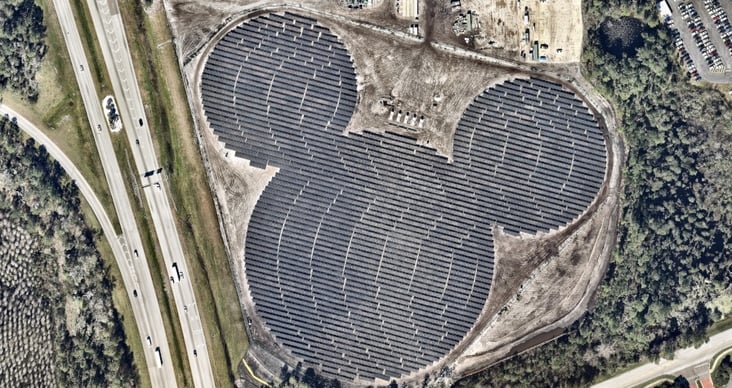
Image courtesy of Nearmap.

With more than 20 million residents, Florida is the third most populous state in the country, and one of the fastest growing. It is also a major energy consumer, ranking second nationally in retail electricity sales. Because of the need for year-round air conditioning, it also has one of the highest rates of home electricity consumption in the United States. As the state grows and consumers continue to demand more energy choices, Florida is increasingly turning to advanced energy to meet its electricity needs - and reaping the economic benefits that come with it.   We began to quantify these benefits last year with publication of Advanced Energy in Florida, a report that measured the size of the advanced energy industry in the Sunshine State in terms of dollars. The results were impressive: Florida is home to an industry that brought in $6.2 billion in revenue in 2014. Now, we know that advanced energy means jobs in the Sunshine State as well. 

Read More

Topics: State Policy

Grappling with the Water-Energy Nexus in California

Posted by Emilie Olson on Jun 23, 2016 9:30:00 AM

drought-california-water-energy-pixabay-079866-edited.jpg

California is entering its fifth year of drought and is in the midst of decision-making about the future of the state’s climate goals. California’s water infrastructure represents one of the state’s largest energy users, consuming 19% of the state’s electricity for treating, pumping, and conveyance. The greenhouse gas (GHG) emissions associated with California’s water use are equal to the emissions from more than 7 million cars. This is what we call the water-energy nexus, and it is the next frontier for California’s climate and energy leadership. Advanced Energy Economy recently provided policymakers with our business-based perspective on it.

Read More

Topics: State Policy, California Engagement

Do Demand Charges Make Sense for Residential Customers?

Posted by Coley Girouard on Jun 21, 2016 4:30:00 PM

This post was originally published on SmartGridNews. Read it in full by clicking here.

Screen_Shot_2016-06-20_at_5.15.45_PM.png

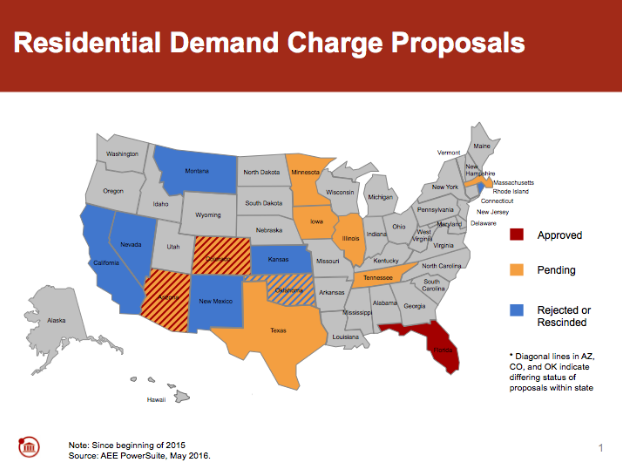
The rise in customer-sited distributed generation (DG) and the success of energy efficiency (EE) programs in reducing load growth have brought rate design to the fore as utilities look for ways to ensure cost recovery and reduce risk. The large uptick in fixed charge proposals has continued as a result, but now a new trend toward a more sophisticated rate design has emerged - demand charges. Demand charges, the argument goes, are intended to better align revenue collection with cost and provide a strong incentive for customers to reduce their peak consumption. But do they really make sense for residential customers?

Read More

Topics: State Policy, PUCs

Search

About

Advanced Energy Perspectives is Advanced Energy United's blog presenting news, analysis, and commentary on creating an advanced energy economy. Join the conversation!

Subscribe Here!

Recent Posts

Posts by Topic

See all