Green New Deal vs. Green Real Deal: What Do They Mean for Advanced Energy?

Posted by Dylan Reed on Apr 3, 2019 3:00:00 PM

Green ___ Deal-500

Today, Florida Congressman Matt Gaetz (R-FL-1) released a “Green Real Deal” resolution in response to the Democratic proposal authored by Sen. Ed Markey (D-MA) and Rep. Alexandria Ocasio-Cortez (D-NY-14). The introduction of each proposal marks a significant shift in the focus on advanced energy at the federal level. Over the previous 24 months, the advanced energy industry spent much time and energy – often with a coalition of unusual allies – beating back proposals that would have provided out-of-market payments to uneconomic power plants to the tune of $34 billion. Fast forward to today, and both parties are putting forward visions on federal energy policy with advanced energy at the center. Neither is going to become law any time soon. Rather, they represent starting points in a discussion that will take place over the coming years. Here’s what each of these starting points contain for advanced energy. 
Read More

Topics: Federal Priorities

Topping 3.5 Million Workers, Advanced Energy Employment Grows Twice as Fast as All U.S. Jobs

Posted by Bob Keough on Mar 27, 2019 4:00:00 PM

AEE-jobs_by_industry_2018 graph-730

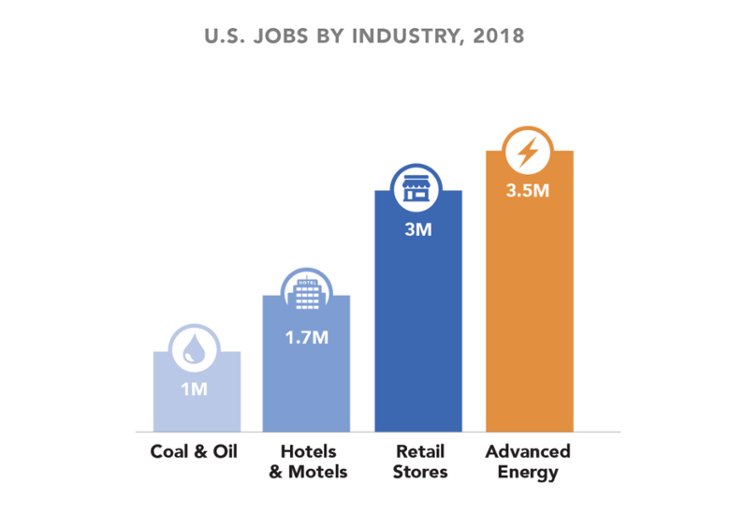
The advanced energy industry employed just over 3.5 million U.S. workers in 2018, an increase of 125,000 jobs over 2017. Advanced energy employment grew 4% last year, more than twice as fast as overall U.S. employment growth, at 1.5%. And the growth continues: Employers expect to add 6% more advanced energy jobs in the coming year. These are some of the findings derived from the 2019 U.S. Energy and Employment Report (USEER), produced by the Energy Futures Initiative (EFI) in partnership with the National Association of State Energy Officials (NASEO), using data collected and analyzed by BW Research Partnership. Want more proof that advanced energy is a major source of employment? Comparison to other significant U.S. industries might help.

Read More

Topics: Advanced Energy Employment

Alongside Gov. Ritter, AEE Emphasizes Economic Benefits of Advanced Energy to Nevada Lawmakers

Posted by Ray Fakhoury on Mar 26, 2019 11:00:00 AM

Ray 1

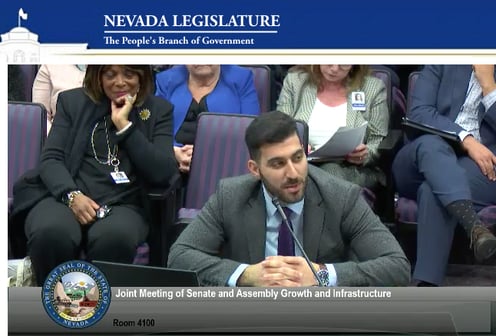
It’s no surprise that advanced energy has a home in Nevada. But when your neighbors include Colorado, California, and New Mexico, the status quo just won’t cut it. Hoping to keep pace regionally, Nevada’s Senate and Assembly Growth and Infrastructure Committee invited AEE, alongside former Colorado Governor and clean energy champion Bill Ritter and nonprofit solar developer Grid Alternatives, to present the economic case for expanding investments in advanced energy technologies.

Read More

Topics: State Policy

AEE to FERC: Confirm that ISO New England Can’t Change Rules for Energy Efficiency Resources without Following Established Processes

Posted by Jeff Dennis and Sierra Salser on Mar 20, 2019 4:41:11 PM

ISO-NE petition-500

Last month, AEE filed a petition for declaratory order with the Federal Energy Regulatory Commission (FERC) raising alarm over suggestions that ISO New England (ISO-NE) might implement significant changes to the measurement and verification of energy efficiency resources in the region’s Forward Capacity Market (FCM) without following appropriate procedures. The petition, filed jointly with Sustainable FERC Project, seeks an order from FERC that would protect market participant investments in existing energy efficiency resources from retroactive changes made solely at ISO-NE’s discretion, and ensure that any future changes would occur only through established procedures, including review and approval by stakeholders and ultimate FERC approval.

Read More

Topics: Wholesale Markets

BQDM Program Demonstrates Benefits of Non-Traditional Utility Investments

Posted by Coley Girouard on Mar 19, 2019 1:14:24 PM

BQDM Blog Image_3.19.19

This is the fourth in a six-part series on utility business model reform provided by Rocky Mountain Institute, America's Power Plan, and Advanced Energy Economy Institute, originally published by Utility Dive.

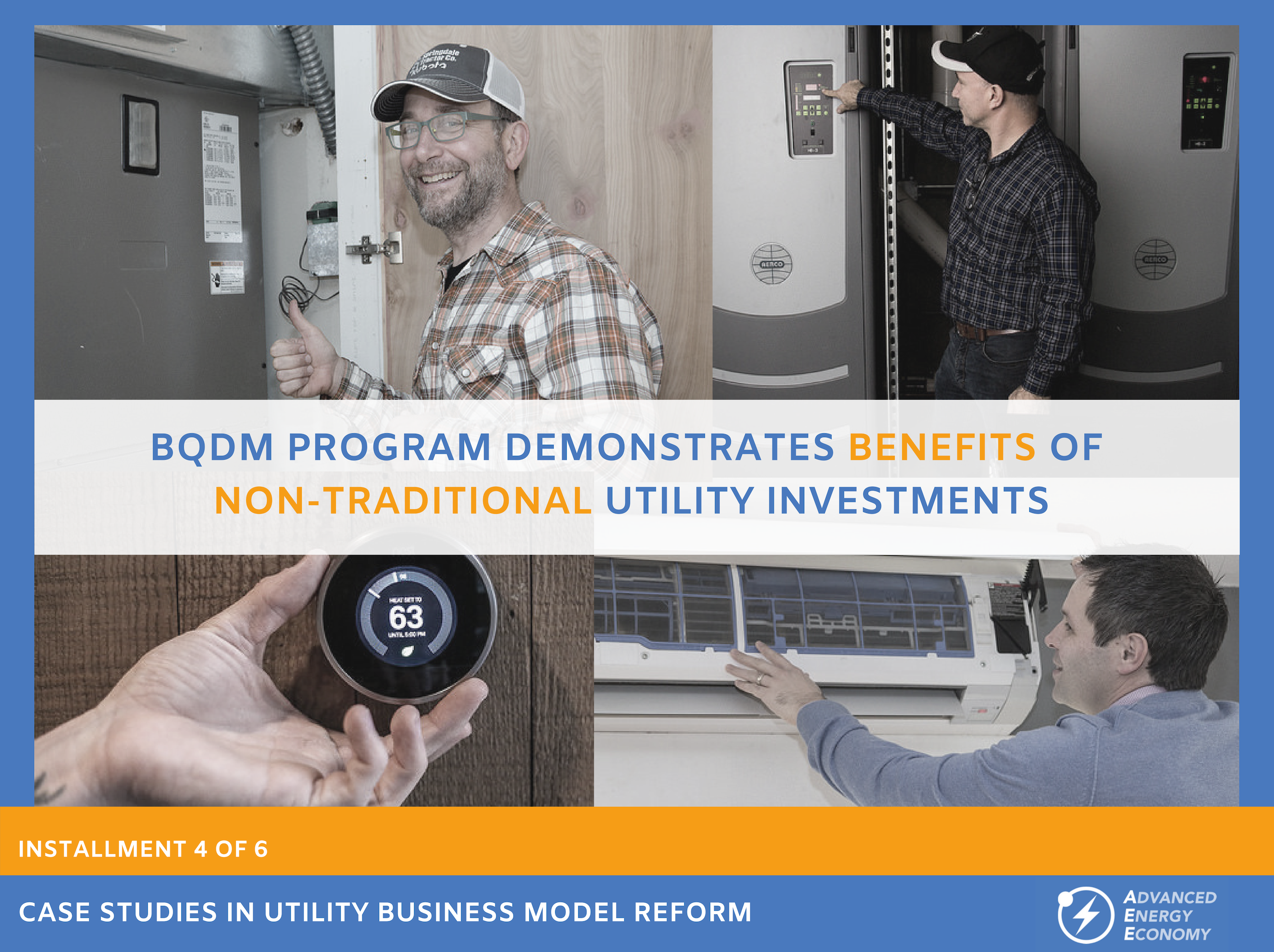
Incentives inherent in the traditional cost-of-service utility revenue model discourage utilities from investing in non-traditional solutions. This is because non-traditional solutions, such as demand management programs and distributed energy resources (DER), are normally treated as operating expenses, which are passed through to customers without earning a return. Instead, if a utility invests in a traditional "poles and wires" solution, it is given the opportunity to earn a rate of return — creating a profit motive. But it doesn't have to be this way.

Read More

Topics: Regulatory

Search

About

Advanced Energy Perspectives is Advanced Energy United's blog presenting news, analysis, and commentary on creating an advanced energy economy. Join the conversation!

Subscribe Here!

Recent Posts

Posts by Topic

See all