 Over the last week, the U.S. House of Representatives moved two spending bills forward that would be harmful to advanced energy interests. In the Senate, a long confirmation process came to an end with Cheryl LaFleur and Norman Bay confirmed as commissioners of the Federal Energy Regulatory Commission (FERC) but only after the White House committed to keeping LaFleur as the chair for nine months before elevating Bay to the role. Meanwhile, DOE’s Loan Program Office offered $4 billion in loan guarantees for the “next wave” of innovative energy technologies.
 In our ongoing efforts to build an advanced energy economy, we go through moments of drama. But some of the most important work we do takes place during periods of relative quiet – building relationships, documenting economic value, and demonstrating public support. I started thinking about that after a long phone call with Ivan Urlaub, executive director of the North Carolina Sustainable Energy Association (
 This week Con Edison announced that it would
 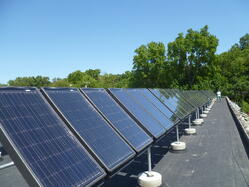 In states around the country, there have been attacks on the net metering policies that support distributed resources, primarily solar power systems. Utilities claim these policies give solar system owners a pass on paying for the infrastructure that connects them to the grid. Advocates claim that net metering gives solar system owners appropriate compensation, on a kW-hour for kW-hour basis, for the excess generation they provide to the grid by offsetting electricity they get from the grid when the sun’s not shining.
 AEE member and industry giant General Electric scored a big win late last month as it