Note: Several links in this article reference documents housed in Advanced Energy United's (previously Advanced Energy Economy)'s energy policy software, Insight Engine™. To enhance your reading experience, click here and sign up for a free 14-day trial of Insight Engine™.
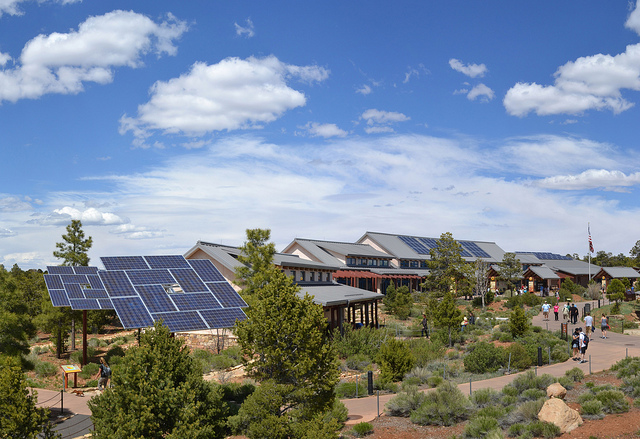
Arizona has some of the most abundant solar resources in the country. The state’s renewable energy standard (RES) of 15 percent by 2025 has helped Arizona generate more solar power than any state in the country save California, and the most solar energy per capita. Rooftop solar is particularly popular in Arizona because of the 30 percent distributed generation (DG) carve-out, half of which is reserved for residential rooftop solar. The thriving solar market in Arizona has benefited from a combination of the state’s unique RES and robust competition among many solar companies active in the state.
 A building envelope consists of all the elements of a building that separate its interior from the exterior environment. This includes external walls, insulation, windows and roofing. Technological advancements in envelope materials have lowered building operating costs. Examples include high-performance insulation, reflective surfaces, air sealing, and efficient windows.
  Although it’s been a while since the term “
 U.S. Environmental Protection Agency held regional hearings on its draft rule for carbon emissions from the electric power system – called the Clean Power Plan – this week, and AEE, our Partners, and our members were well represented. As incumbent energy interests decried imagined impacts and environmental groups touted health and climate benefits, AEE and its allies testified that EPA’s emissions targets would be “easy to achieve” with advanced energy technologies – and spark investment to modernize the electric power system for the 21st century and spur economic growth.
 A Building Energy Management System (BEMS) is an integrated system of software, hardware and services that controls energy use through information and communication technology. Used primarily in commercial buildings, BEMS technology works by monitoring, automating, and controlling building systems such as heating, ventilation, air conditioning, thermostats, and lighting to increase building energy efficiency and improve comfort. Adoption of cloud technology has expanded BEMS from traditional energy visualization and energy analytics to include demand response and property management.