The U.S. Environmental Protection Agency’s (EPA’s) plan to regulate carbon emissions is just the latest challenge facing the U.S. electric power system. Technological innovation is disrupting old ways of doing business and accelerating grid modernization. Earlier this year, AEE released Advanced Energy Technologies for Greenhouse Gas Reduction, a report detailing the use, application, and benefits of 40 specific advanced energy technologies and services. This post is one in a series drawn from the technology profiles within that report.
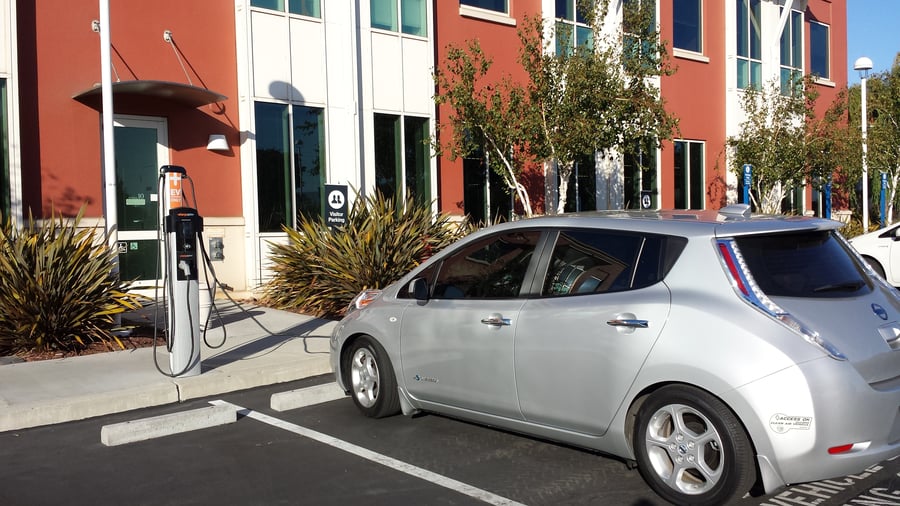
Plug-in electric vehicles (PEVs) are emerging as an important vehicle platform in the United States and globally. PEVs are powered completely or in part by rechargeable batteries. PEVs include battery electric vehicles (BEVs) such as the Nissan Leaf and Tesla Model S, which need to be recharged through external power sources, and plug-in hybrid vehicles (PHEVs) such as the Chevy Volt and Toyota Prius Plug-in, which contain both a battery and a gasoline-powered engine. BEVs typically have ranges of about 100 to 250 miles, while PHEVs have electric-only ranges of about 20-40 miles, after which they operate on gasoline like regular hybrid vehicles.