This post is one in a series featuring the complete slate of advanced energy technologies outlined in the report This Is Advanced Energy.
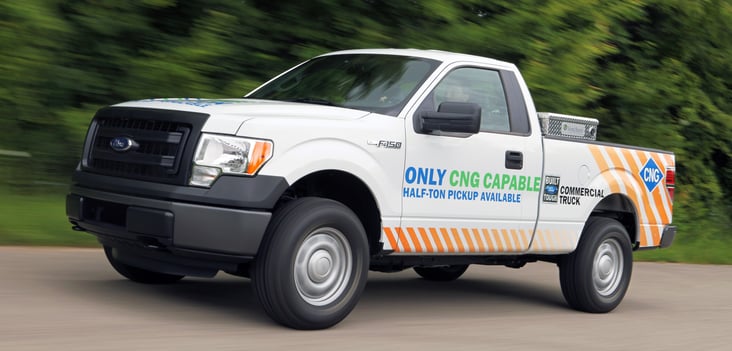
Natural gas vehicles (NGVs) are internal combustion engine vehicles designed to run on either Compressed Natural Gas (CNG) or Liquefied Natural Gas (LNG). There are three basic categories of NGVs: dedicated, bi-fuel, and dual-fuel. Dedicated NGVs are the most efficient as they are designed from the ground up to run only on natural gas. In contrast, both bi-fuel and dual-fuel NGVs have two separate tanks, one for natural gas and another for diesel or gasoline. Bi-fuel NGVs can run on either natural gas or a petroleum fuel (either diesel or gasoline), switching automatically when one fuel runs out. Bi-fuel technology is typically used in light-duty vehicles. Dual-fuel NGVs run on a mixture of natural gas and diesel. They rely mostly on natural gas, but use a small amount of diesel to aid in fuel ignition. Dual-fuel NGVs are more expensive, but their higher efficiency makes them an attractive option for heavy-duty vehicles. Most NGVs rely on less-expensive CNG, but some vehicles used for long-haul trucking run on LNG because its higher energy density increases driving range.