
 Call it a tale of two renewable portfolio standards (RPS). North Carolina’s renewable energy and energy efficiency portfolio standard has just scored a major investment in solar power by the state’s major utility. But in Ohio, a new law freezing that state’s renewable energy standard has already put the local solar industry in a deep freeze.
Duke Energy announced on Monday that the utility would be investing $500 million in solar in North Carolina to meet the state’s requirements. The money would go toward building three new solar farms, as well as purchasing power from five other facilities being built by investors.
“That’s why we’re doing this, for renewable portfolio standard requirements,” said Rob Caldwell, Duke Energy’s vice president of renewable generation development. “One of the objectives of this [process] is to get as many megawatts as attractively priced as we can for our customers, since our customers are paying for this,” he said to Fox Business News. To Greentech Media, Caldwell put it somewhat differently: “Solar prices are coming down. We can make it work at an attractive price.”
While North Carolina’s RPS is bringing in major investment, Ohio has seen what happens when an RPS is stopped in its tracks. Earlier this year, Ohio’s state legislature pushed through a law that froze the state’s renewable energy and energy efficiency standards. The law went into effect last week, and it appears those chickens are already coming home to roost. As Midwest Energy News reports, Ohio’s market for solar energy credits (SRECs), which utilities have to buy from solar installation owners to meet their compliance obligations, has already tanked. As a result, projects have stalled and Ohio solar energy companies have started to look for opportunities elsewhere.
“Projects were put on hold almost immediately,” said Eric Scheier, a portfolio analyst with Sol Systems, a financing and investment firm in Washington, DC.
“Indianapolis, a city just two hours away in driving time from Columbus and Cincinnati, is one of the largest markets for solar,” said Steve Melink, whose Melink Corp. recently completed two projects there. “And here in Ohio we’re saying oh, we can’t do it,” said Melink, a board member of Ohio Advanced Energy Economy. “It shows, I think, that Ohio is heading backwards.”
Nationwide, however, new reports reveal solar energy is making competitive gains. The Lawrence Berkeley National Laboratory released three reports focused on solar energy this week, showing that the price of electricity from large-scale solar generators under long-term contracts has fallen by more than 70 percent since 2008. The reports also show that costs of residential solar are also down, falling 70 cents per watt in 2013 alone.
Prices of wind and solar are falling across the board, according to the Financial Times, becoming cost-competitive with more traditional fossil fuel-based power plants in many parts of the U.S. without government intervention. Falling costs and rising efficiency are increasingly making solar and wind energy sources a financially attractive model.
“We used to say some day solar and wind power would be competitive with conventional generation. Well, now it is some day,” said George Bilicic, global head of power, energy & infrastructure for Lazard, one of the world’s leading financial advisory and asset management firms.
Regulators in California this week approved another enormous solar thermal power plant, similar to Ivanpah. Developers BrightSource Energy and Abenoga Solar were seeking approval for two of the 750-foot-tall monoliths, but the California Energy Commission approved only one. The single approved tower could come online as soon as 2017.
Finally, two new electric vehicle concepts to keep an eye out for. Silicon Valley-based Motiv Power Systems announced that the company’s first fleet of all-electric garbage trucks had been delivered to Chicago and is now in use on city streets. The electric garbage truck not only saves fuel, it’s also incredibly quiet – which could come in handy on early morning trash rounds. And the market for electric motorcycles is heating up, with traditional bike-maker Harley Davidson entering the market. Harley is going toe-to-toe (or wheel-to-wheel) with newcomers like Zero Motorcycles and Mission Motors, both based out of California’s Bay Area. Bloomberg Businessweek says that Harley’s move into electric motorcycles lends credibility to what has been considered a niche market.
Keep track of energy legislation and regulation state-by-state with PowerSuite. PowerSuite is a robust set of tools—including BillBoard, DocketDash, and PowerPortal—that allows you to search, track, and collaborate on energy legislation and regulatory proceedings from across the country with one, easy-to-use interface. Check it out:

Image courtesy of Harley Davidson.
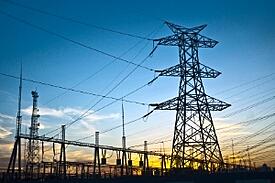 As Congress returned to session focused on passing a continuing resolution to keep the government funded through December 11, the Senate Finance Committee held a hearing on energy tax reform, the Environmental Protection Agency (EPA) extended the comment period on its proposed Clean Power Plan, and the D.C. Circuit Court of Appeals declined to review a ruling on a Federal Energy Regulatory Commission (FERC) demand response regulation.
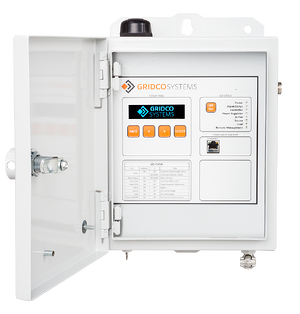 Energy analytics for mass-scale building energy efficiency evaluations is a category of software solutions that determine how a building is currently consuming energy and recommend operational and retrofit measures to maximize energy savings. Energy analytics combine different types of data inputs, such as consumption or building asset data, with advanced analytics and modeling techniques to rapidly generate a unique building energy model. Leveraging big data energy analytics via the cloud saves substantial time and costs compared with the traditional manual methods of performing building assessments and audits.
 We are now a little over four months into the landmark regulatory proceeding in New York State called “Reforming the Energy Vision,” or REV. With REV, the New York Public Service Commission (PSC) is seeking to fundamentally transform the way the state’s electric distribution utilities are regulated and how they do business – changing the way electricity is generated, bought and sold in New York. The REV proceeding is arguably the most comprehensive yet to tackle what is variously known as “Utility of the Future,” “Utility 2.0,” or as we at AEE call it, the “21st Century Electricity System.” (Users of PowerSuite can track and collaborate on this vital regulatory proceeding
 The “sharing economy.” It’s the new, new thing (or, depending on your perspective,